Small chart. Big questions.
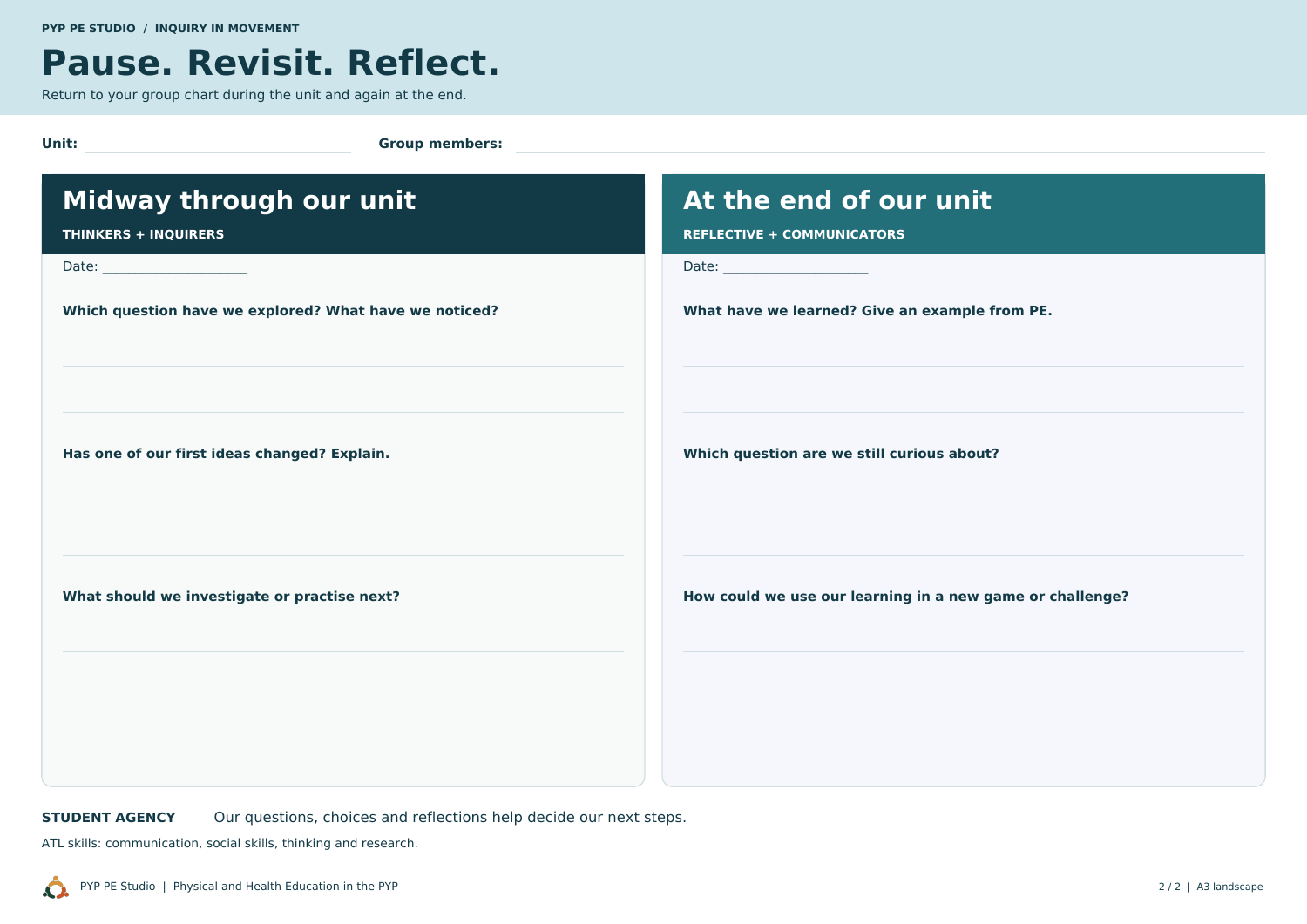
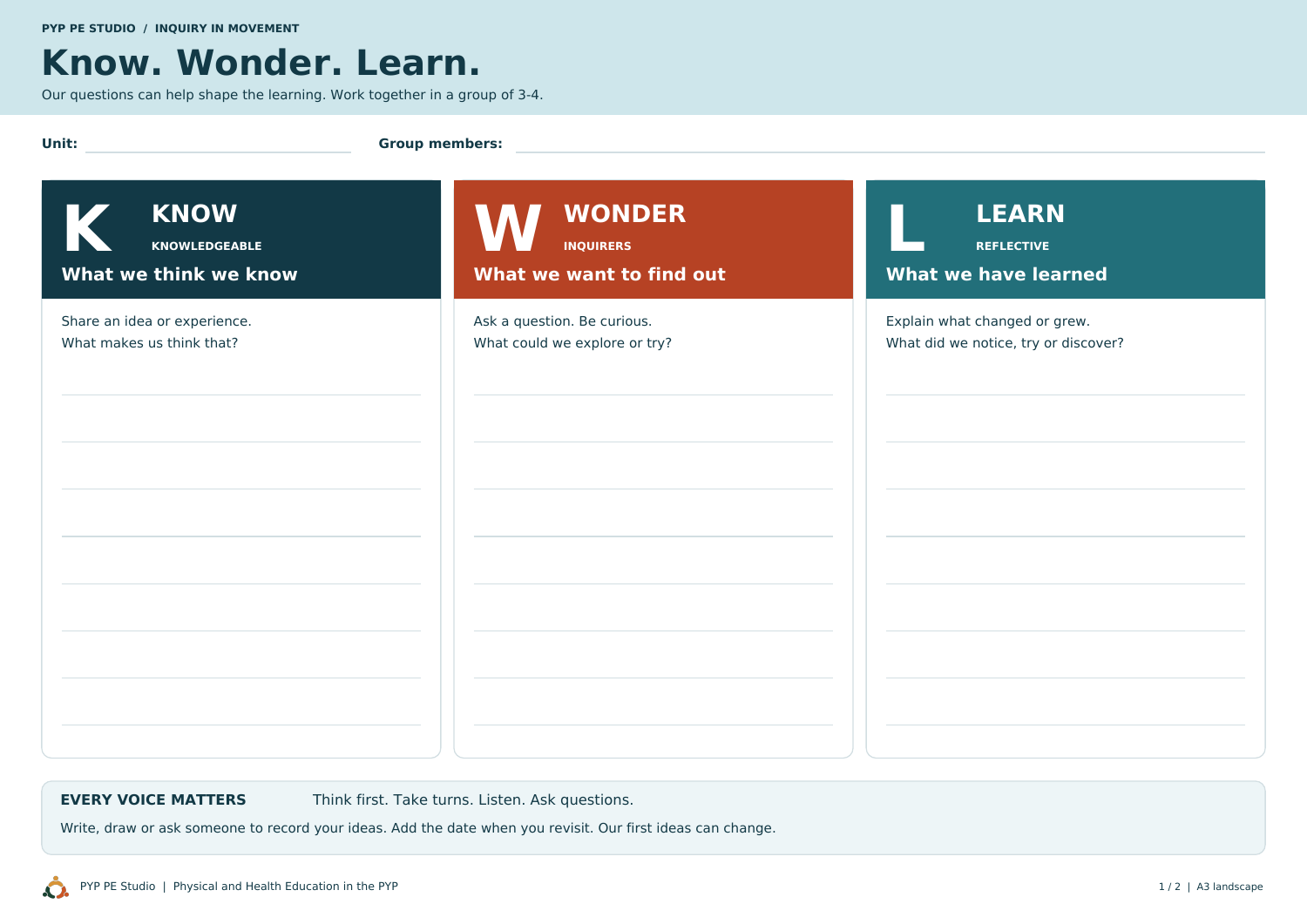
Download the KWL chart to spark curiosity and guide inquiry in PE.
Read & download PYP-PE.comPhysical and Health Education in the PYP
Resources and reflections for inquiry-led Physical and Health Education in the PYP.
Big questions.
Try ideas together.
Notice what we learn.
Download the KWL chart to spark curiosity and guide inquiry in PE.
Read & download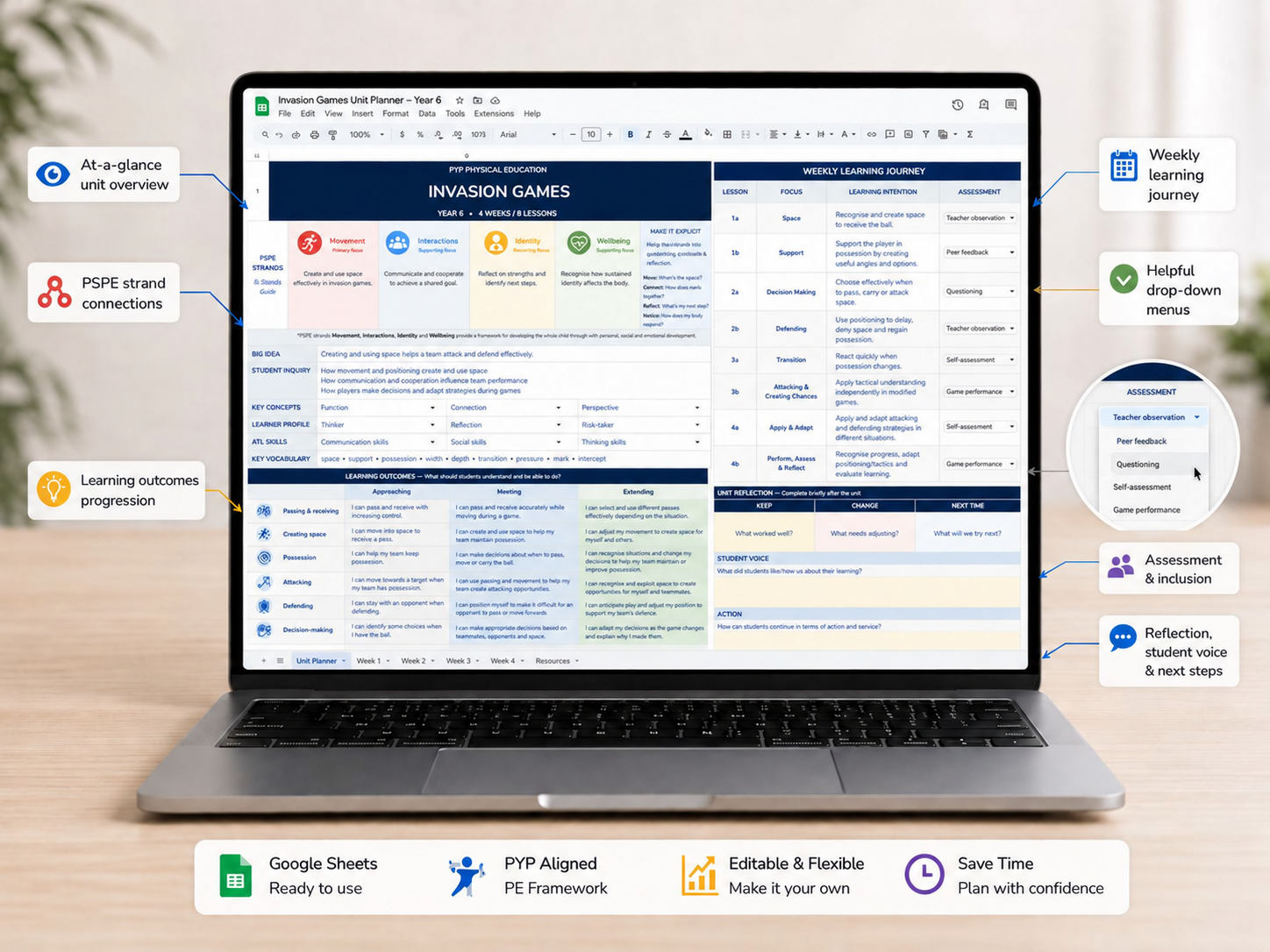
A completed Year 6 Invasion Games example to support inquiry and reflection.
Explore the plannerCreate a shared understanding of learning, safety and respect in PE.
Read & downloadExplore how the Learner Profile comes to life in movement, games and personal development.
Explore the postersIdeas to support inclusion, belonging and positive participation in PE.
Read the lessonStudent agency, assessment for learning and inquiry through movement.

I’m currently serving as Primary PE Subject Leader at the International School of The Hague, with 15 years of international teaching experience. I’ve taught inquiry-based PE in Switzerland, Singapore, China and South Korea. I’m interested in how student voice, purposeful choices and assessment for learning help every child feel capable, connected and ready to move.
This space shares practical tools and reflections from that experience, alongside ideas being developed and tested in lessons. The aim is to give teachers useful starting points to adapt for their own learners and settings.
Find a starting point for your learners. Adapt it, question it, and make it your own.
Use a KWL chart to explore prior knowledge, listen to learners and shape the unit together.
Read the post & downloadA completed example, with dropdown menus and visuals to make planning easier to use.
Explore the plannerPYP-PE.com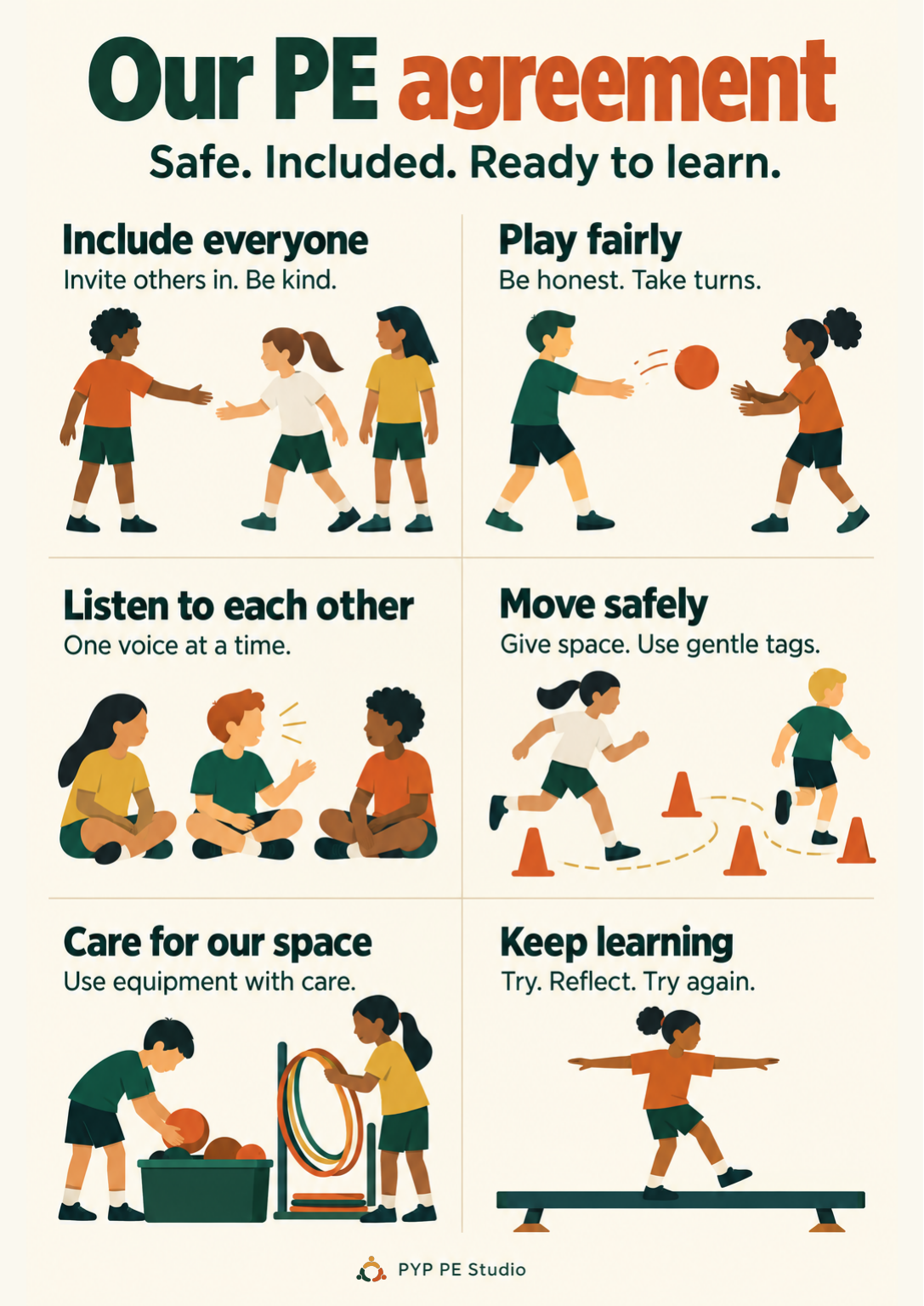
Turn student ideas into a shared promise, with an A3 poster to sign and revisit.
Read the post & downloadPYP-PE.comEnd-zone handball with a focus on support, space and meaningful involvement.
PYP-PE.comA playful movement inquiry using pathways, levels and student-created challenges.
PYP-PE.comSketch ideas, observe teammates and plan the next move while waiting to play.
PYP-PE.comA sequence-building task with choice, peer feedback and time to refine.
PYP-PE.comA manageable observation format with space for student thinking and next steps.
PYP-PE.comSimple prompts that help students notice, explain and improve their learning.
PYP-PE.com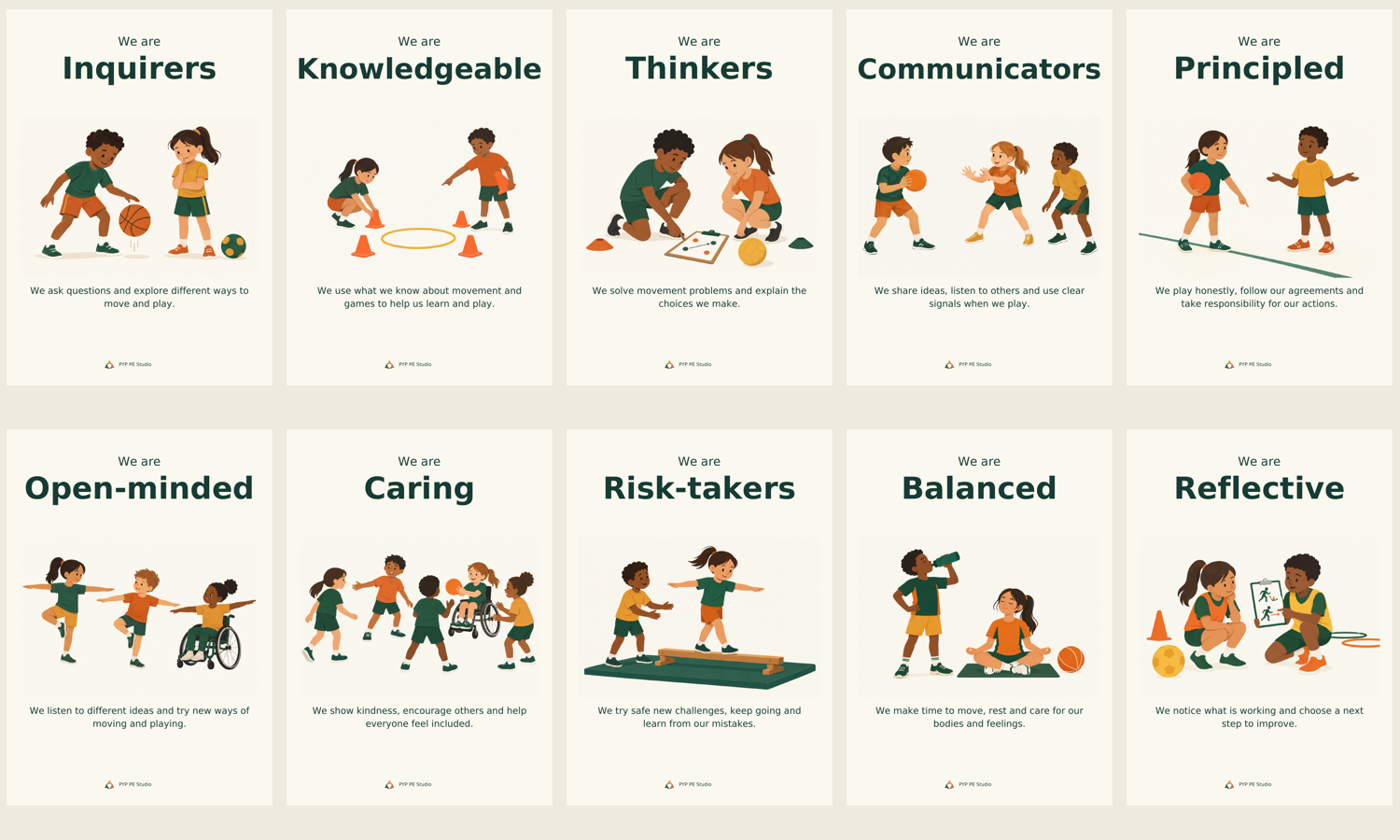
Ten illustrated posters that connect the attributes to movement, teamwork and everyday choices.
Explore the poster collectionPYP-PE.comNo resources match these choices. Try another age group or resource type.
An end-zone handball lesson that invites students to investigate what meaningful inclusion looks like in a team.
“I use end-zone games with learners as young as Grade 1, adapting the space, team size and rules to help everyone participate. With upper grades, this also works well as an introduction to handball. Later in the unit, adding goals and nets allows the game to develop while keeping the focus on finding space, supporting teammates and including everyone.”
For younger learners, begin with smaller teams, a soft ball and generous passing time. Introduce the everyone-passes challenge when learners are ready.
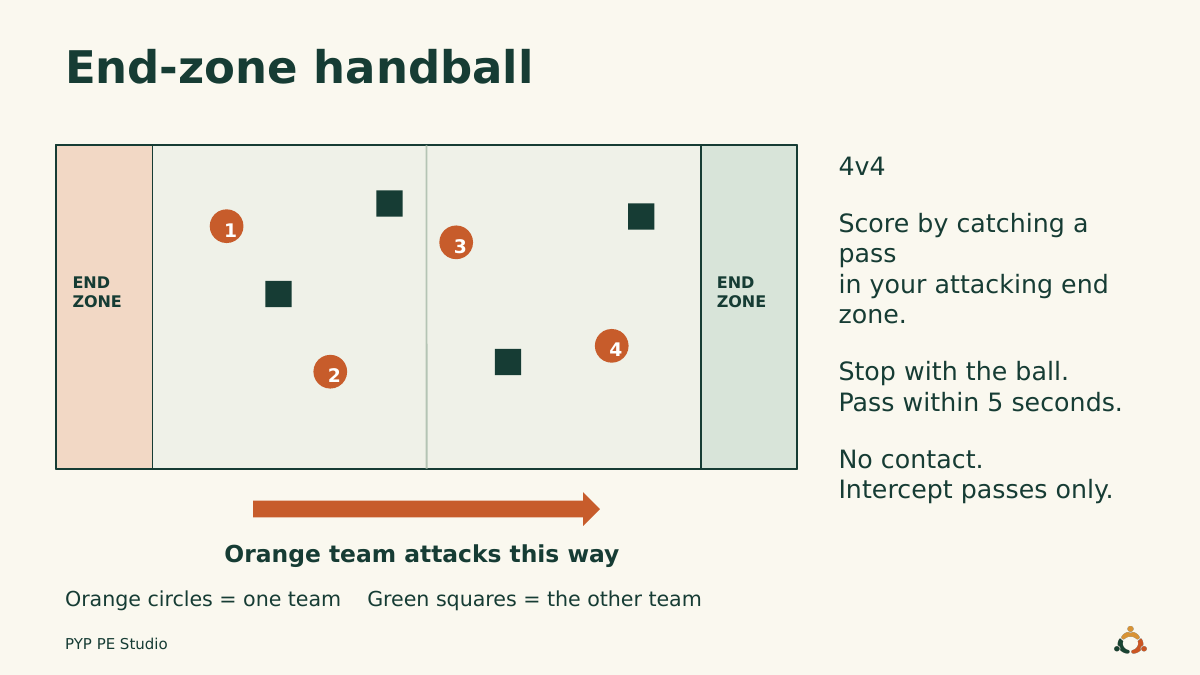
Seven student-facing slides cover the game, inclusion challenge, tactical vocabulary, Learner Profile actions and feedback between rounds.
Open Google Slides Download slide PDF
Download sideline observer sheet
The deck follows its Google Drive sharing settings. PDF copies are available here.
Observers choose one focus, record what they see or hear and offer one next step. Rotate roles each round. Ask teams to test a change and compare involvement.
How can our team help everyone contribute?
Start with 4v4. Score by receiving a pass in the end zone. No contact; intercept passes only. Players stop with the ball and pass within five seconds.
Who is finding space? Who is receiving the ball? Invite teams to explain what helps a player become a passing option.
Try a rule: every teammate must receive and make a pass before the team can score. Let teams decide how they will help each other achieve this.
Did the rule improve involvement? What changed in your movement or communication? Ask students to suggest the next adaptation.
30 September 2026
PYP-PE.com brings together practical resources and ideas for meaningful, inquiry-led Physical Education.
Explore unit planners, assessment tools, strategy cards, inquiry prompts and student-friendly success criteria, alongside reflections on how these tools can support learning in the gym and on the field.
At the heart of this is a question: how can we create meaningful PE that lives the PYP? PE where students help shape the learning, understand their progress and explore ideas through movement.
Find something to try, adapt and build on with your own learners.
How student voice can shape a shared agreement for PE.
A gym agreement built togetherClear displays and simple cards for conversations in the gym, on the field or beside the court.
I noticed…
I tried…
Next time I will…
PYP-PE.comWhere is the space?
How can you support?
What will you try next?
PYP-PE.comChoose a balance.
Add a way to travel.
Link them with control.
PYP-PE.comInvite. Listen. Adapt.
What can your team change?
PYP-PE.comThe linked Y6 Invasion Games unit is a completed example of how the specialist planner is used to connect inquiry, learning outcomes and the lesson sequence.
Dropdown menus make it easier to select planning elements, while the colour coding, icons and clear sections help teachers find the information they need. The visuals bring the unit overview and learning journey together in a format that is easy to scan.
The Y6 unit shows how the planner can support four weeks of invasion games learning, including student agency, team strategy, PYP concepts, Learner Profile and ATL skills. Supporting tabs provide references for concepts, the Learner Profile, ATL skills and the teacher inquiry cycle.
Use the example to see how the different parts connect, then adapt the approach to the learners, activities and context of another unit.
Open the completed Y6 exampleOpens in Google Sheets. Open the sheet for the complete working unit.
What do we need from each other to feel safe, included and ready to learn in PE?
A gym agreement begins with this conversation. When students help decide what matters in their shared space, they have a voice in how the learning community works.
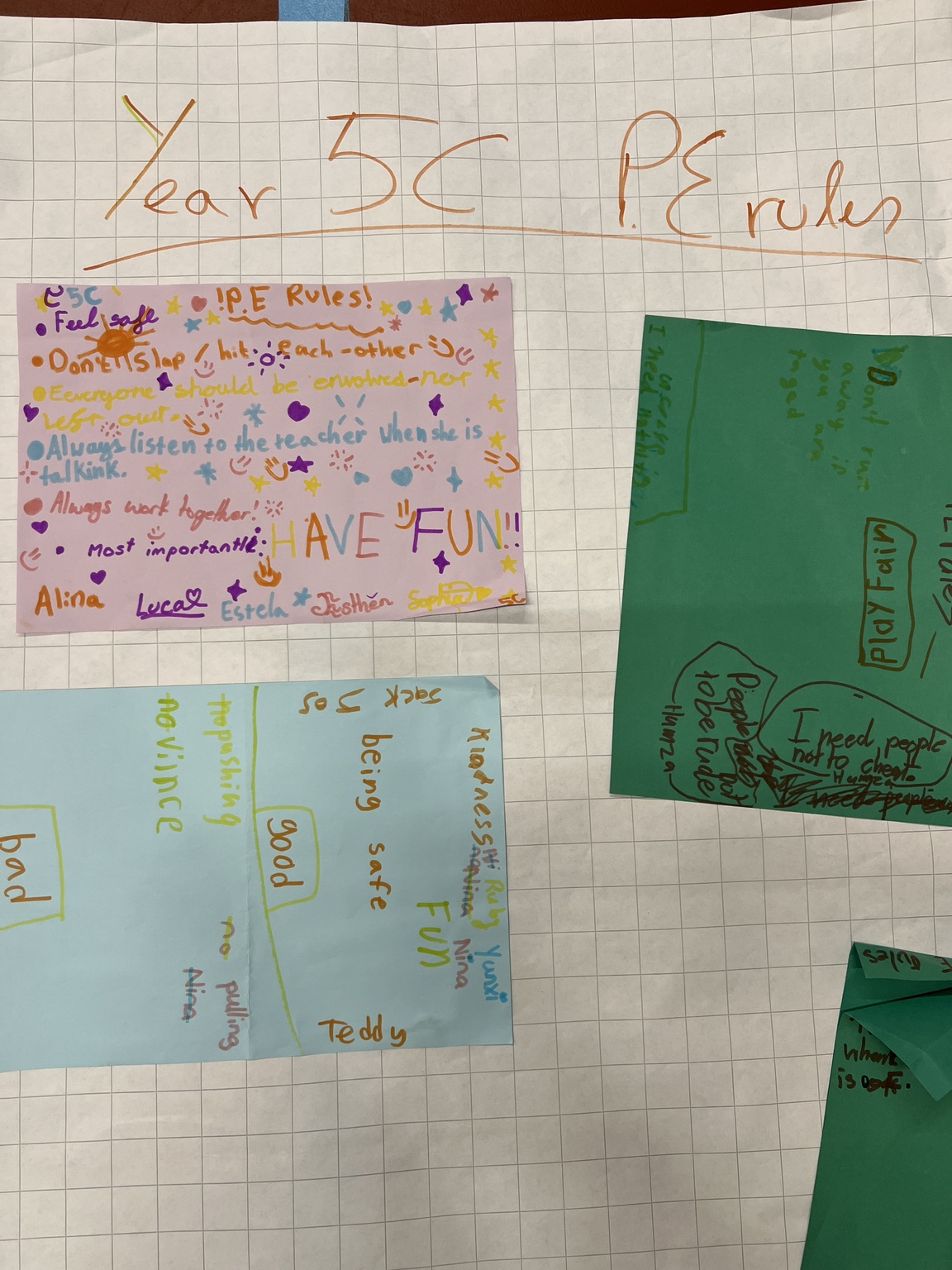
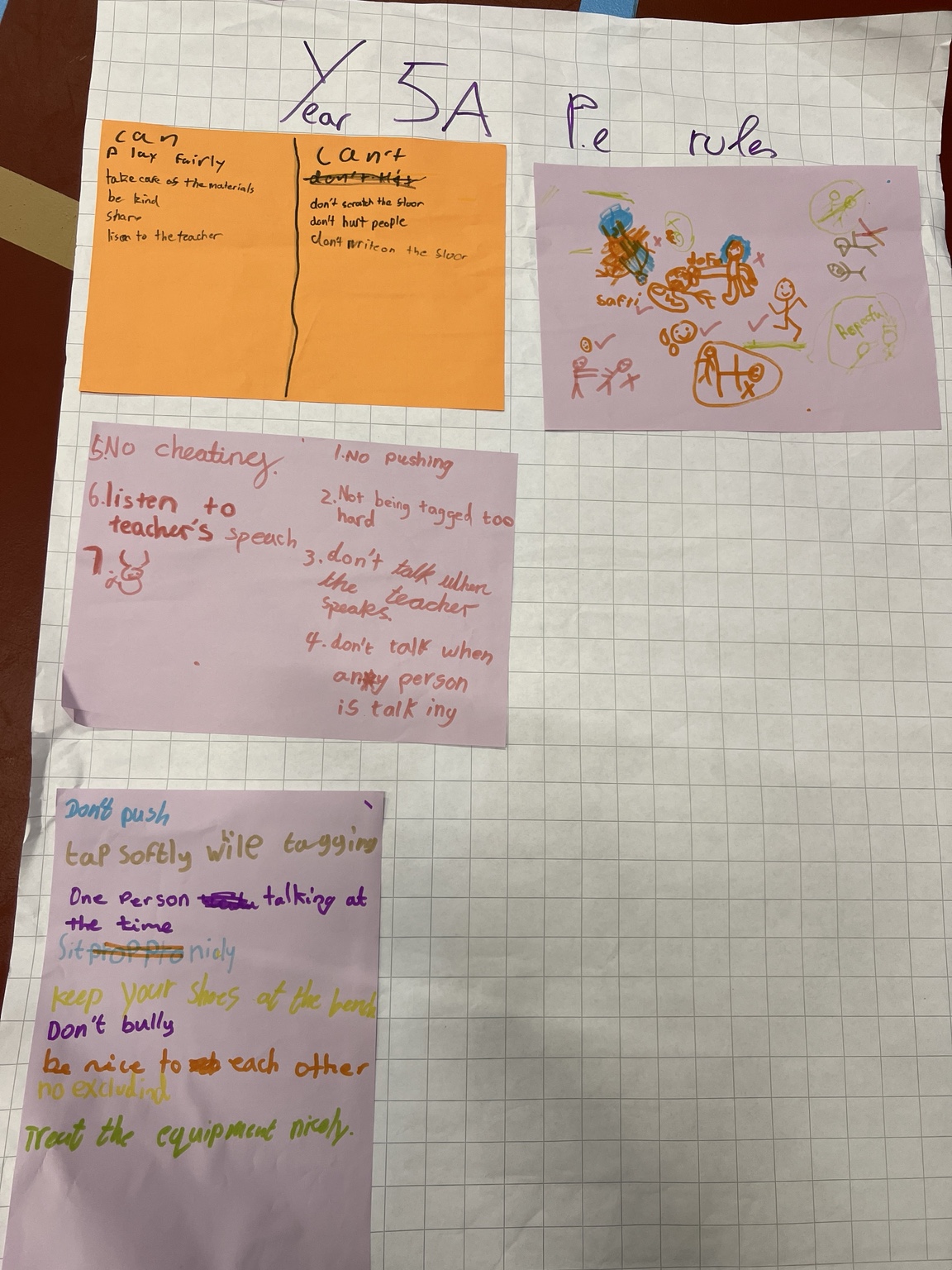
Invite small groups to discuss, draw and write what a positive PE lesson looks and feels like. Ask what helps everyone join in, what fair play means and how people and equipment should be treated.
The student posters below return to some clear themes: kindness, inclusion, listening, safety, honesty and responsibility. Bring these ideas together in a short agreement, using language that students understand. Discuss what each promise looks like during a game, a transition or a moment of disagreement.
Print the main poster and invite every class to sign it, draw a mark or add a contribution. Signing gives a visible sense of shared ownership: these are promises the community has helped shape.
The two-page download includes a main display poster and a matching signing poster with space for class signatures. Use it as a starting point, then check that it reflects the ideas and language of the learners who will use it.
Download both A3 posters · 2-page PDF
Return to it throughout the year. When kindness or taking turns needs attention, ask: “What did we agree? What would that look like now?” Give students a chance to suggest the next step and put their promise into practice.
Revisit it to celebrate, too. Notice a student inviting someone into a game, a team sharing equipment or a group listening carefully. Connect that moment to the agreement so students can recognise how their choices help others learn.
Student agency grows through these everyday opportunities to contribute, act and reflect. The agreement becomes something learners practise together.
These nine posters show the ideas students contributed. Select a photo to see it in full.
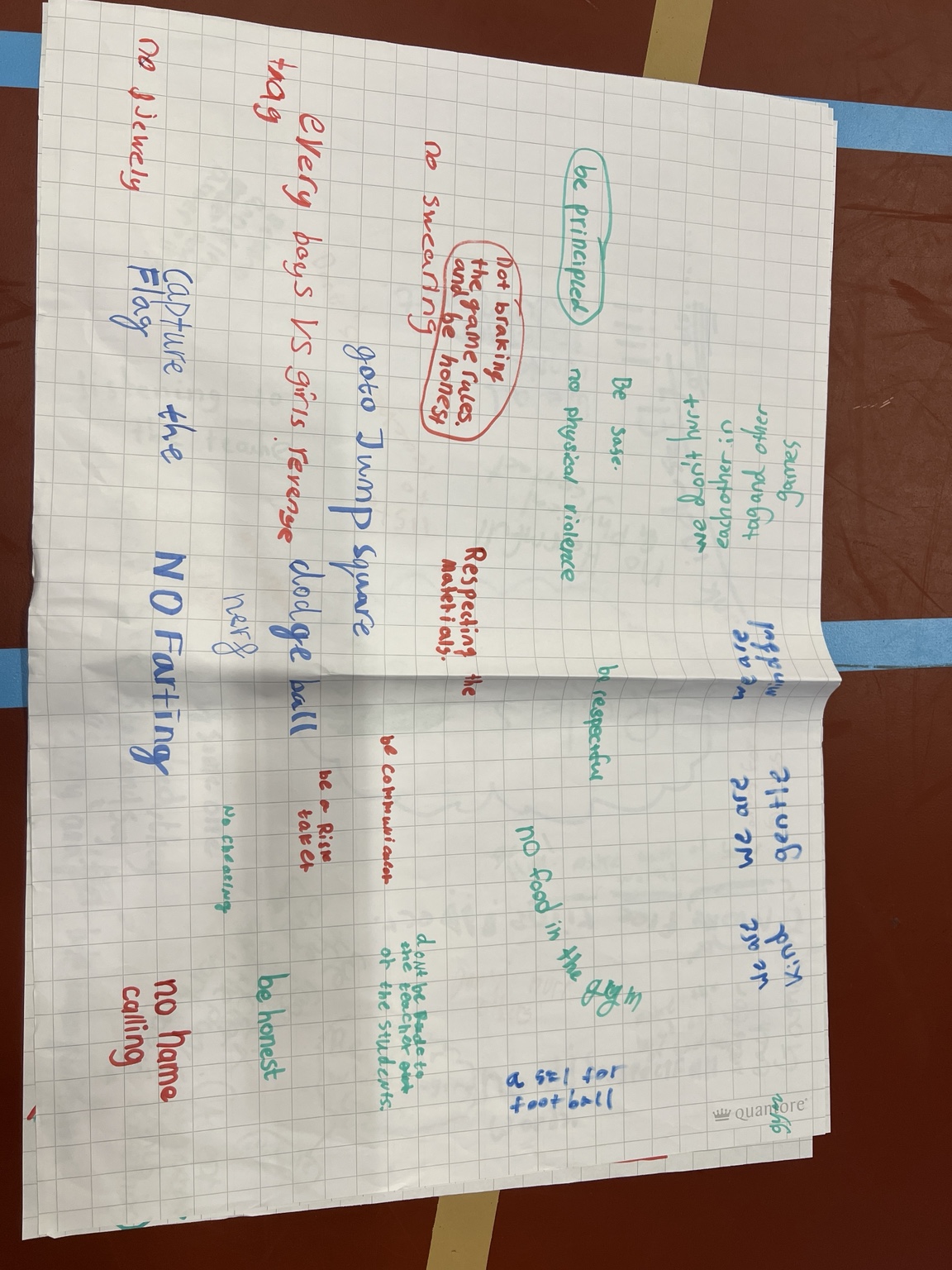
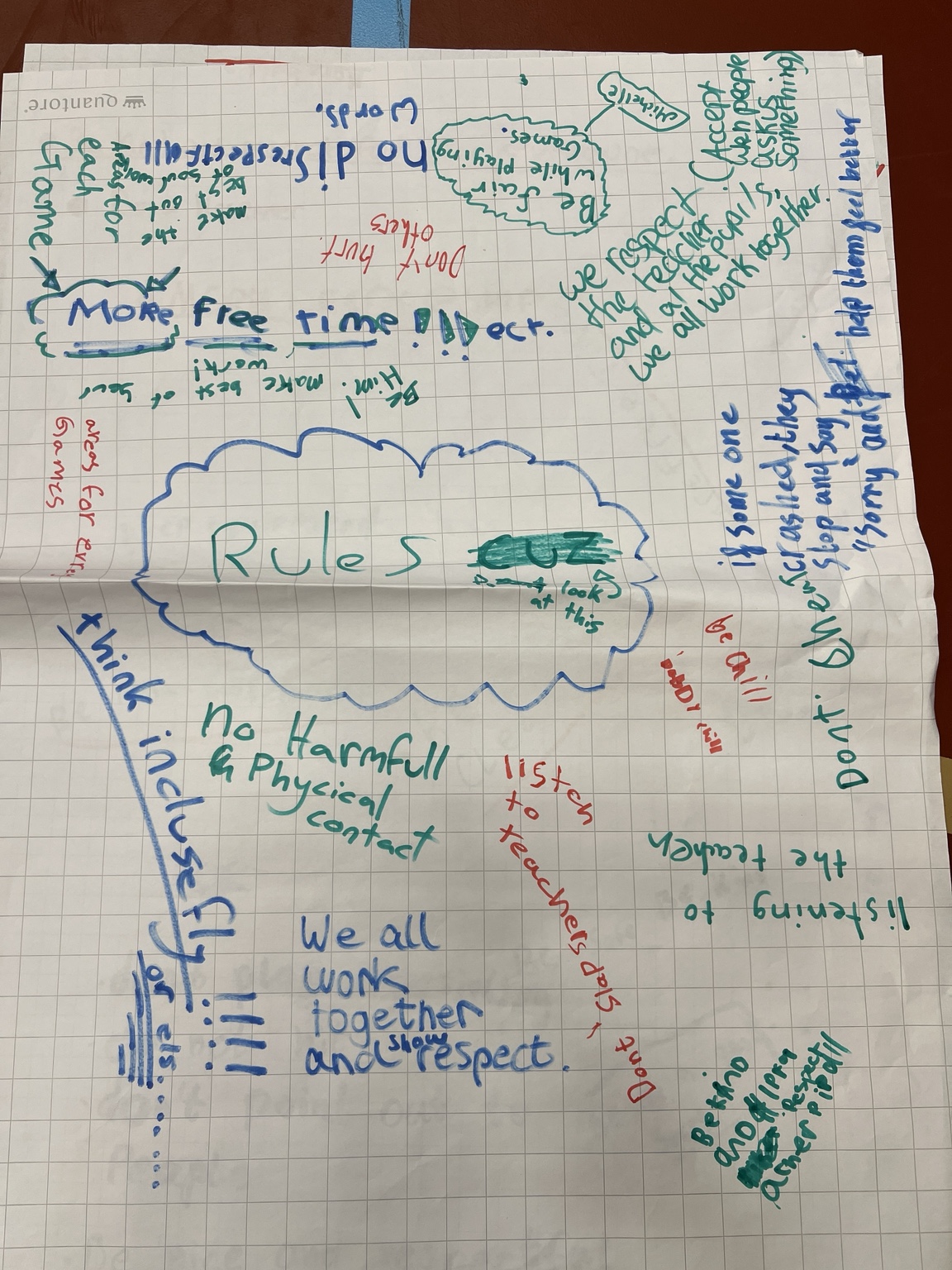
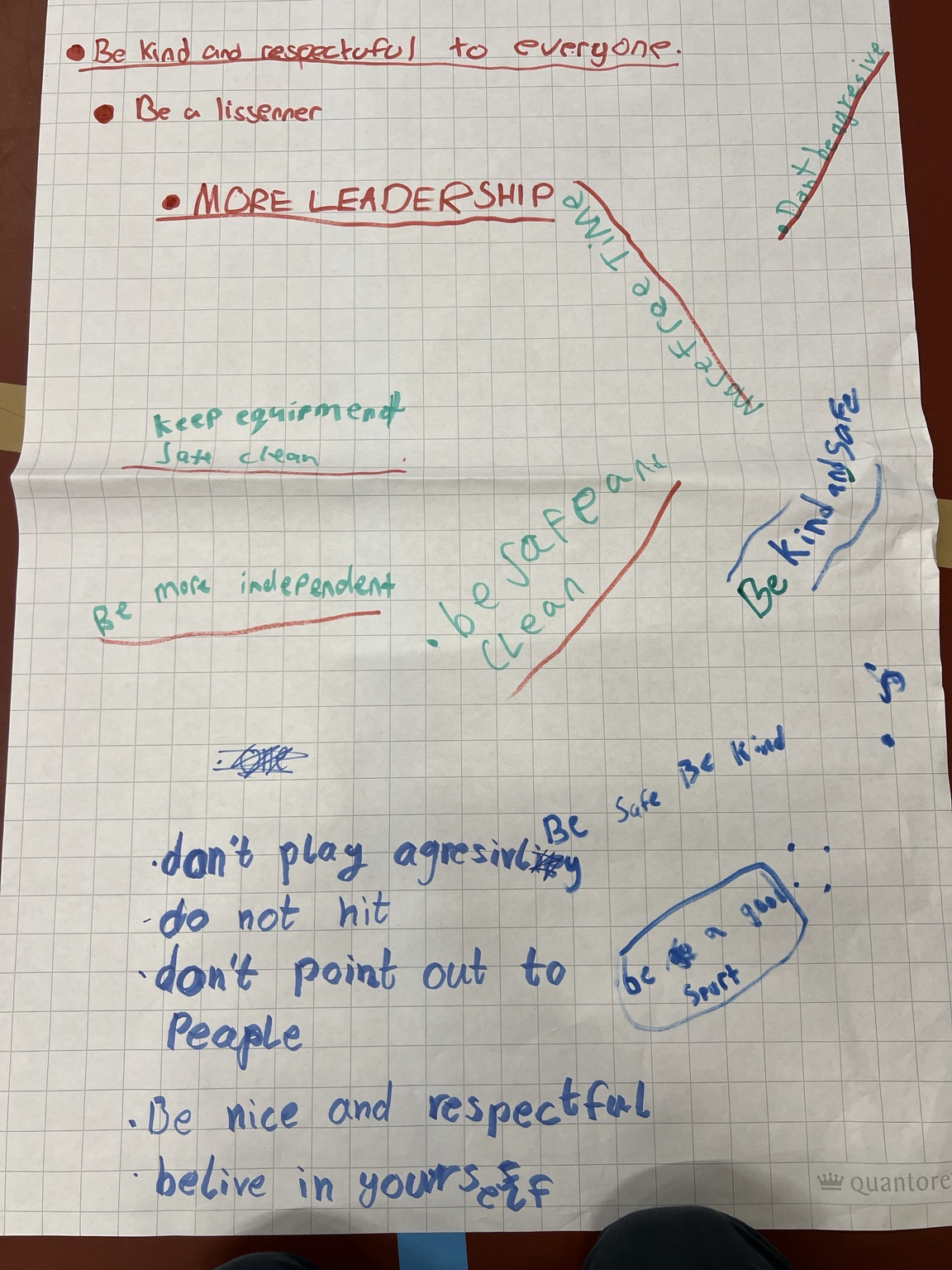
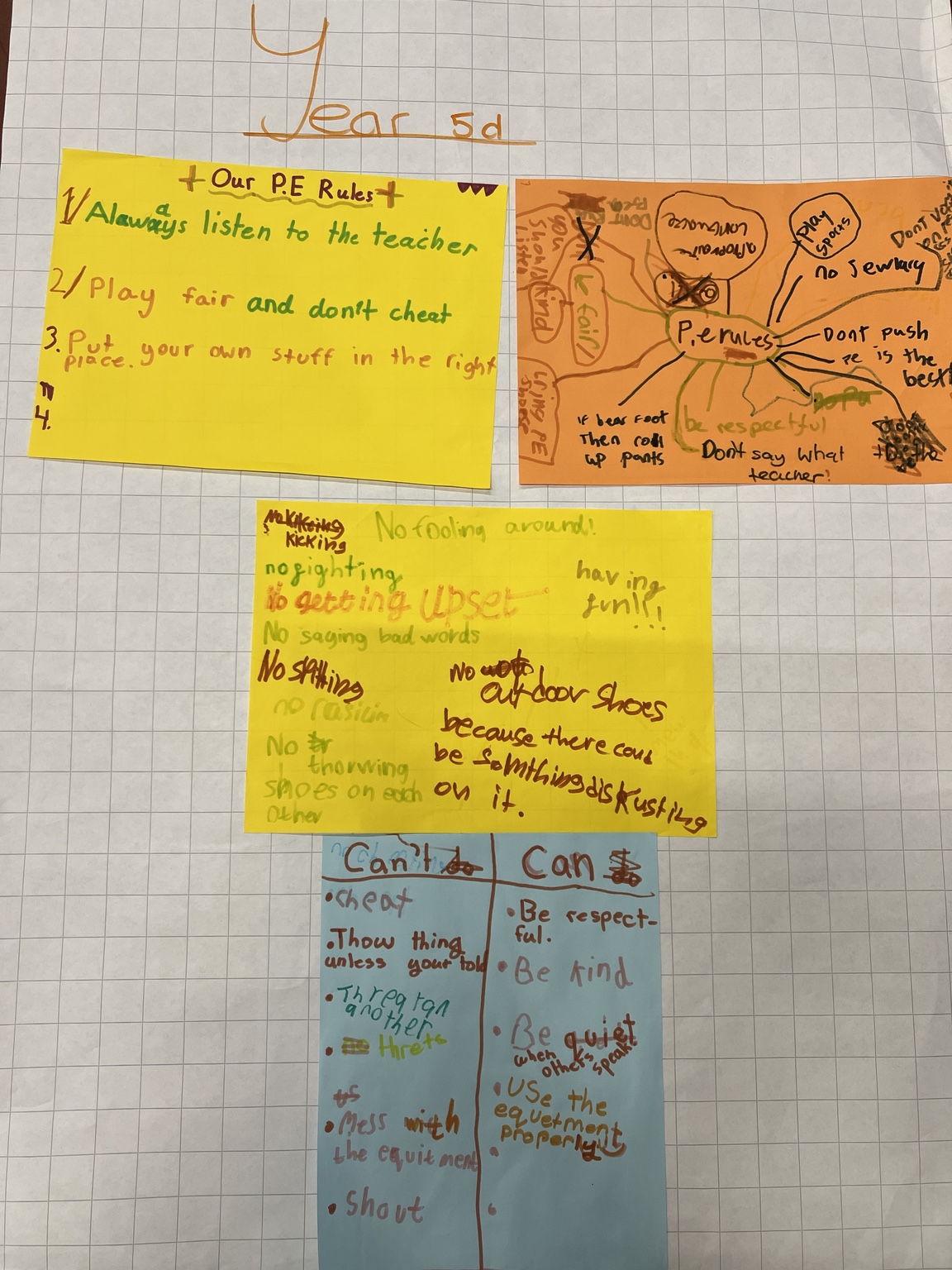
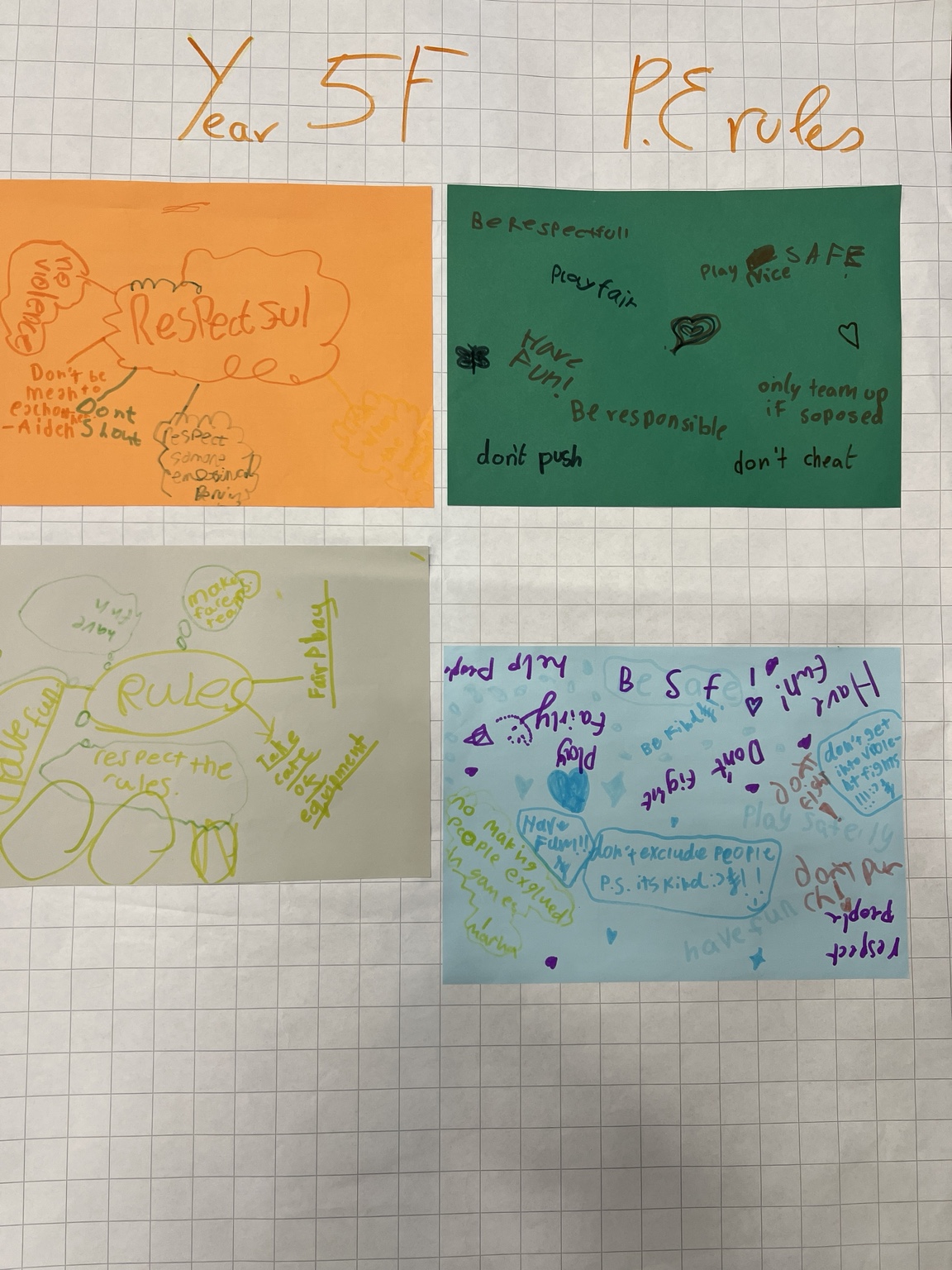
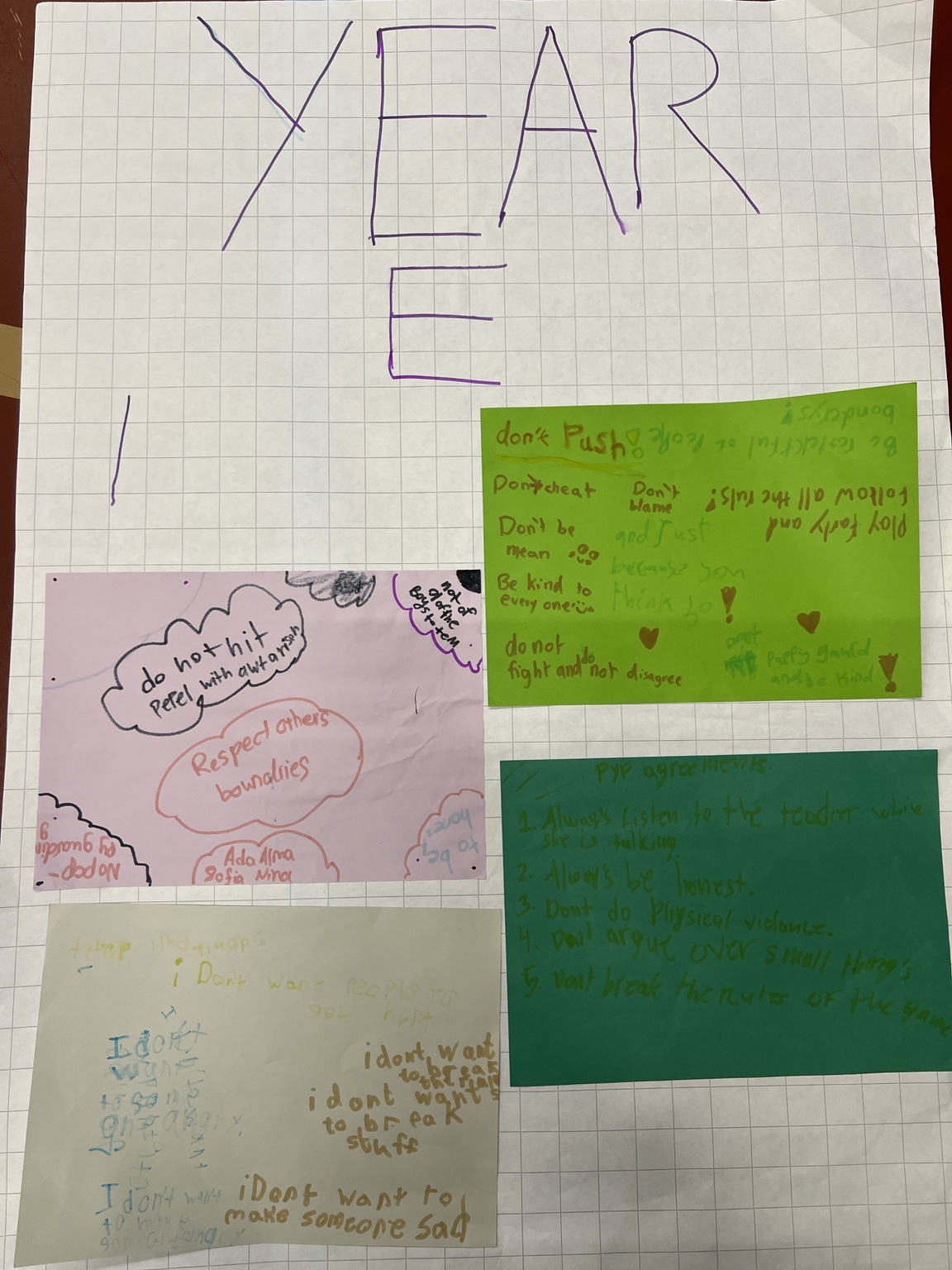
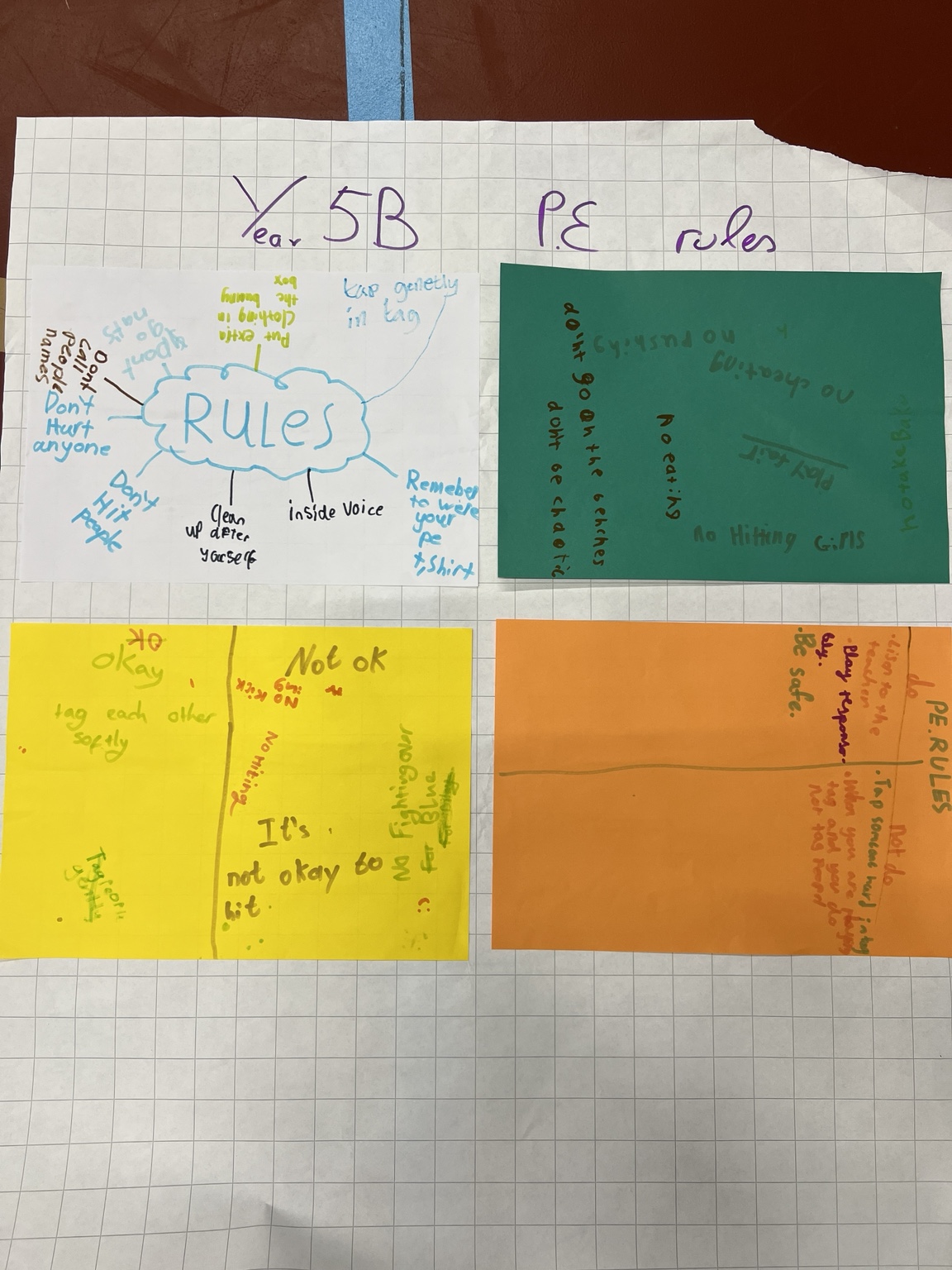
A shared language for the choices we make, the way we learn and how we include one another.
The Learner Profile becomes meaningful when children can connect its language to something they do. In PE, that might be trying an unfamiliar balance, listening to a teammate's suggestion or being honest about a ball going out.
This collection brings all ten attributes into the gym through large, bold titles, clear PE illustrations and short, student-friendly explanations. The wording offers PE examples of the attributes, rather than replacing the IB's full Learner Profile descriptions.
Download all 10 posters · A3 PDF
One attribute per page. Print at A3, or choose “fit” to print at A4.
For a wall outside the gym, this compact version brings five attributes together on each A3 page. Display the two posters side by side so students, families and colleagues can see all ten PE examples.
Download the 2-page A3 wall display
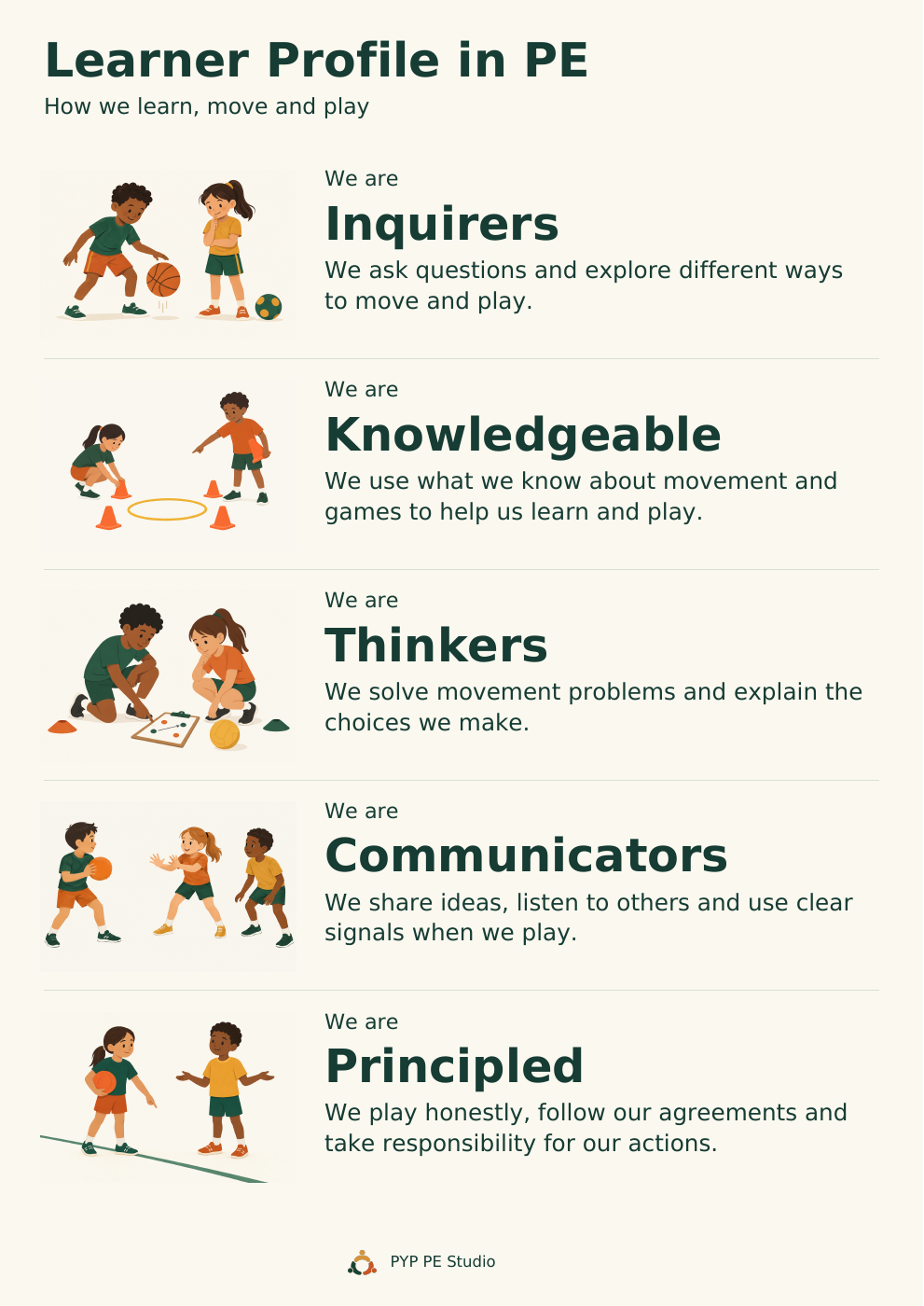
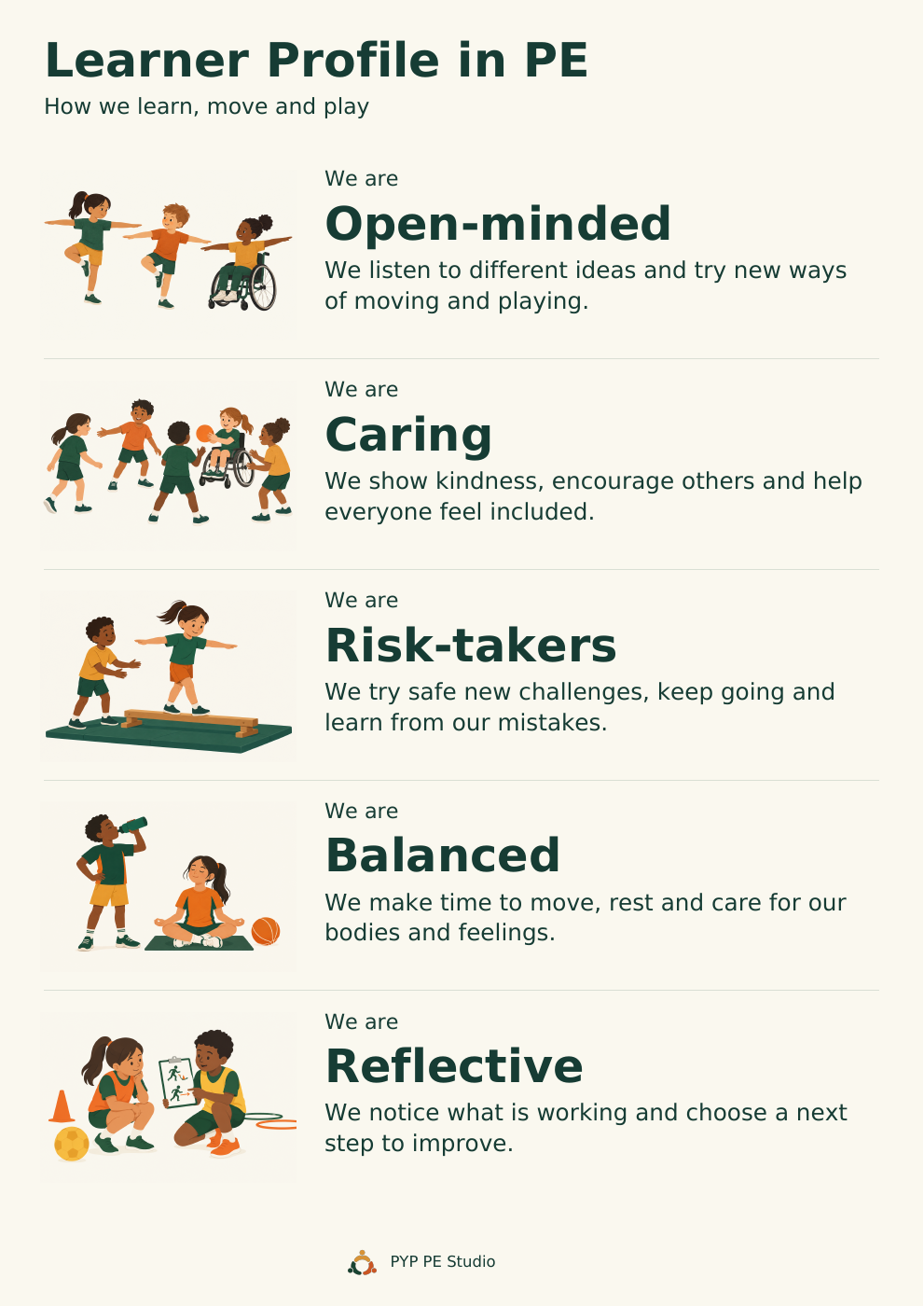
An image gives learners a concrete example to discuss alongside the written word. A child can point to the passing signal on the Communicators poster, then demonstrate their own. This offers another way into the language for younger learners, multilingual learners and anyone who benefits from a visible reminder.
Use the posters with movement, modelling and conversation. The aim is to make meaning accessible through several approaches, rather than assign children a fixed learning style. Invite learners to explain what they notice and suggest other examples: each picture is a starting point.
Select one or two attributes that connect to the lesson. Before a new movement challenge, ask: “What could being a risk-taker look like today?” Emphasise safe challenges, asking for support and learning from mistakes.
Pause briefly when a useful example appears: “You invited someone into your passing circle. How did that help them feel included?” Connect Caring to the action and its effect.
When a disagreement happens, return to Principled: “What was our agreement? What would an honest, fair decision look like now?” Use the language to support reflection and repair.
End with a short reflection: “Which attribute did your team practise? What did you see or hear? What will you try next?” Learners can speak, point, draw or demonstrate.
For teachers new to the PYP, the display provides familiar reference points to return to while planning and teaching. Connect an attribute to the learning intention, model an example and listen for students' explanations. Over time, add examples from the class so the language belongs to the learners as well as the display.
Keep the focus on actions that can develop. The posters are prompts for learning, not labels for judging a child's character.

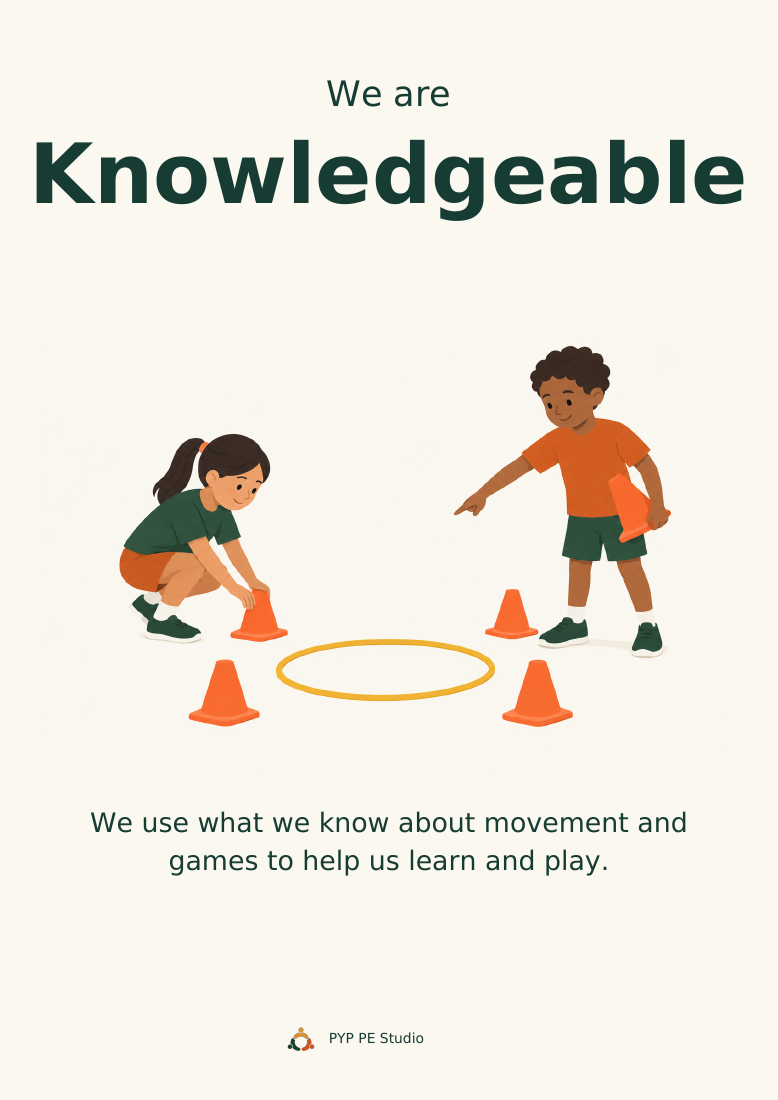
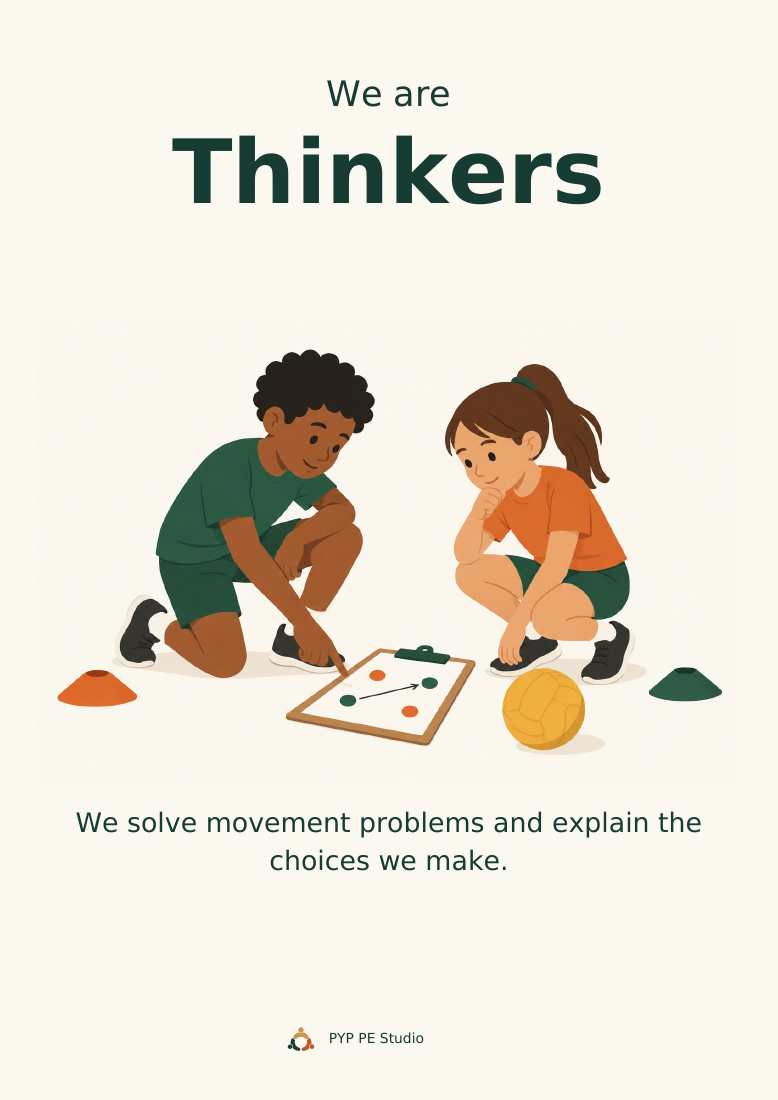
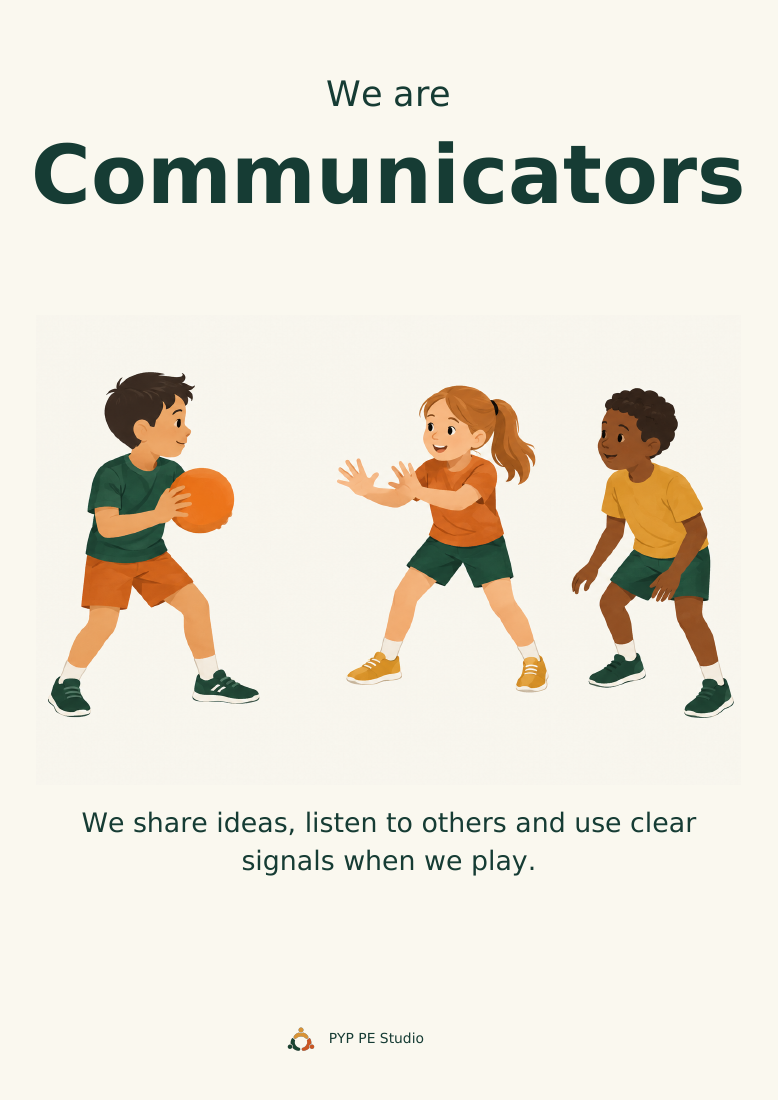
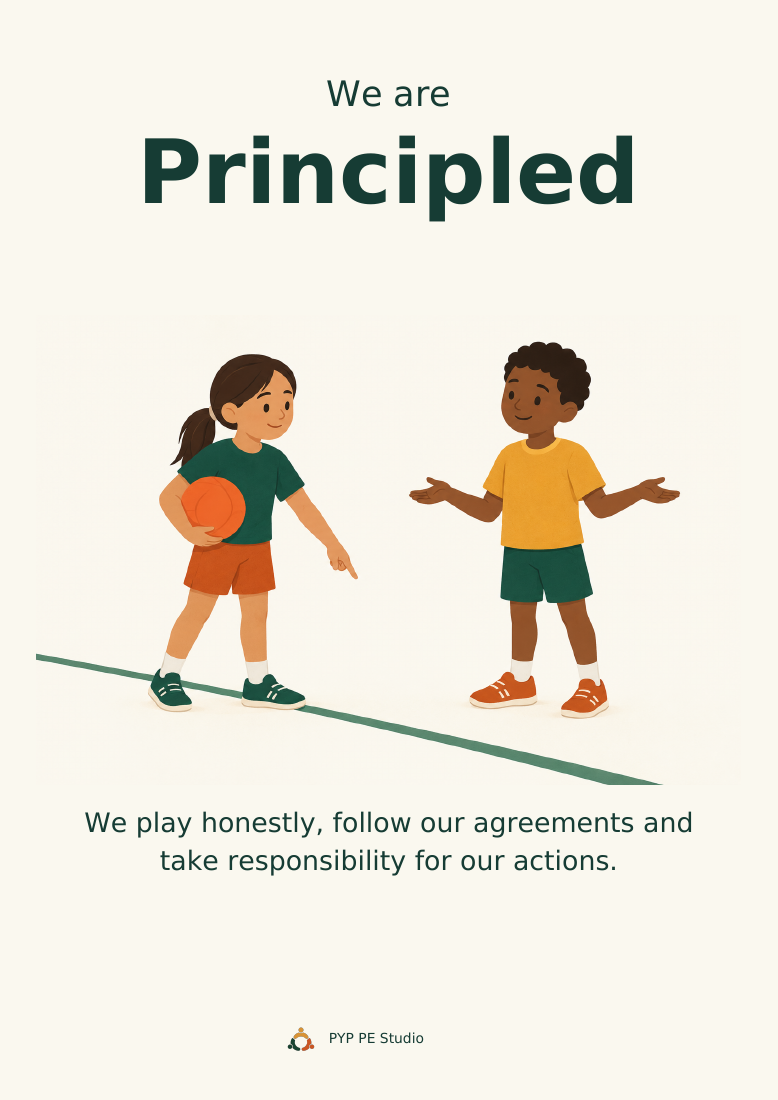
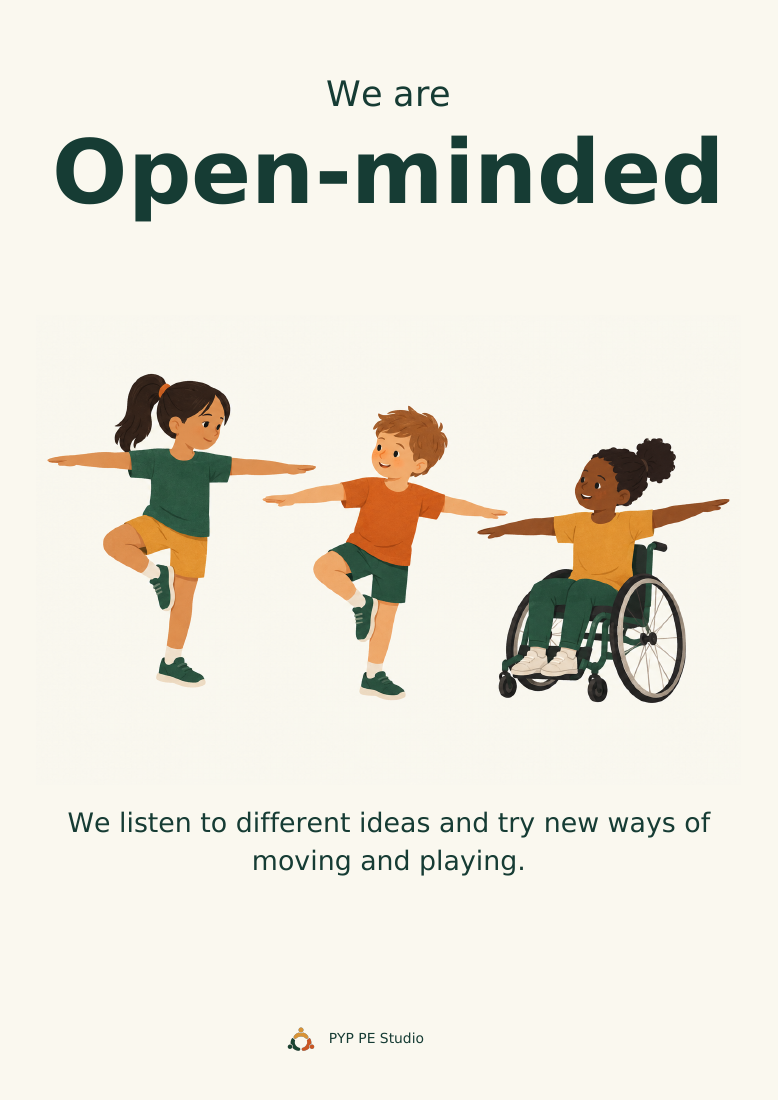
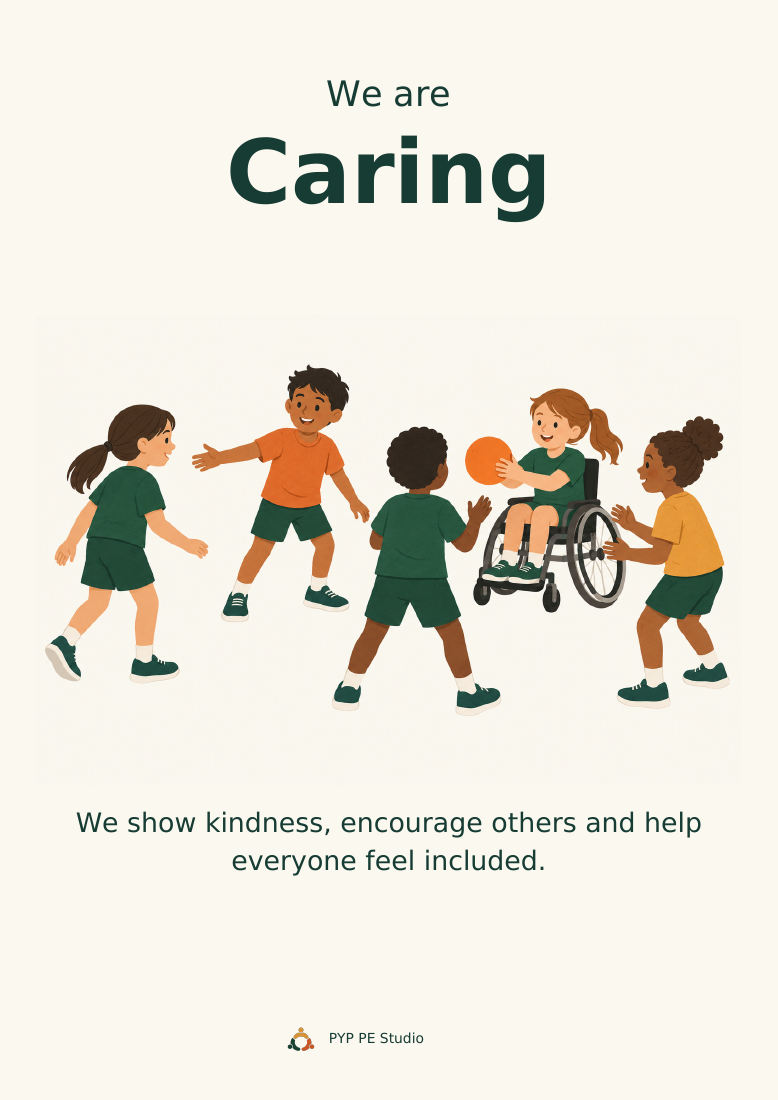
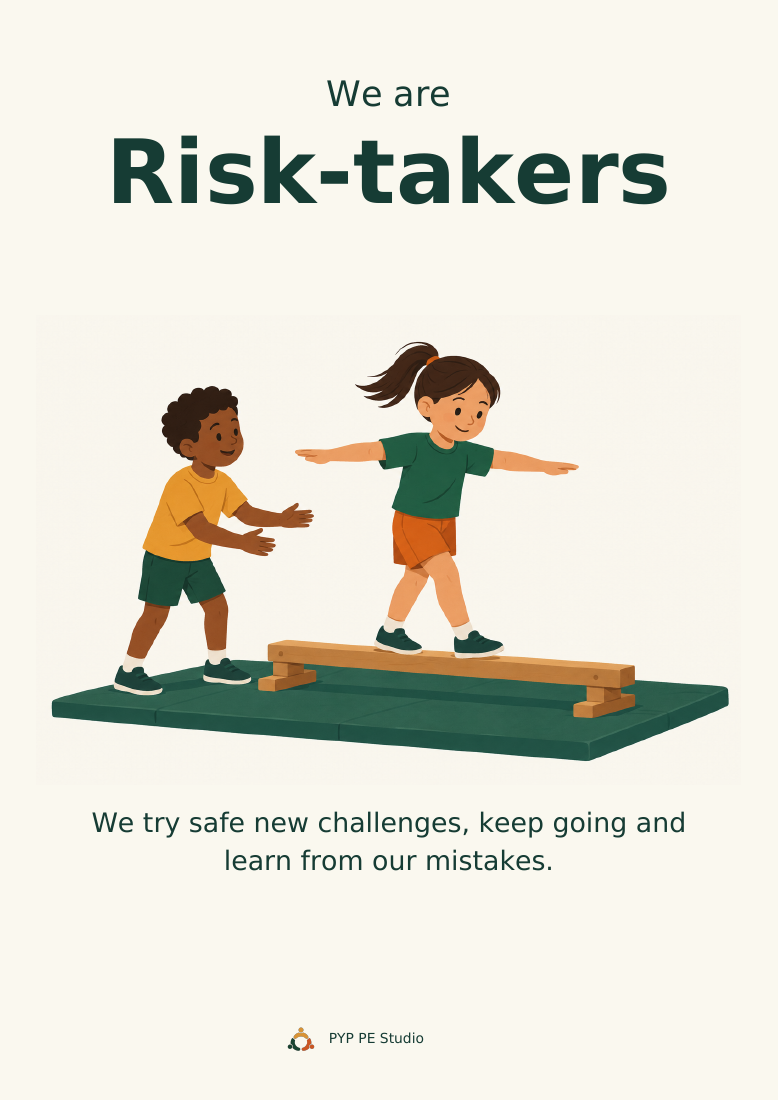
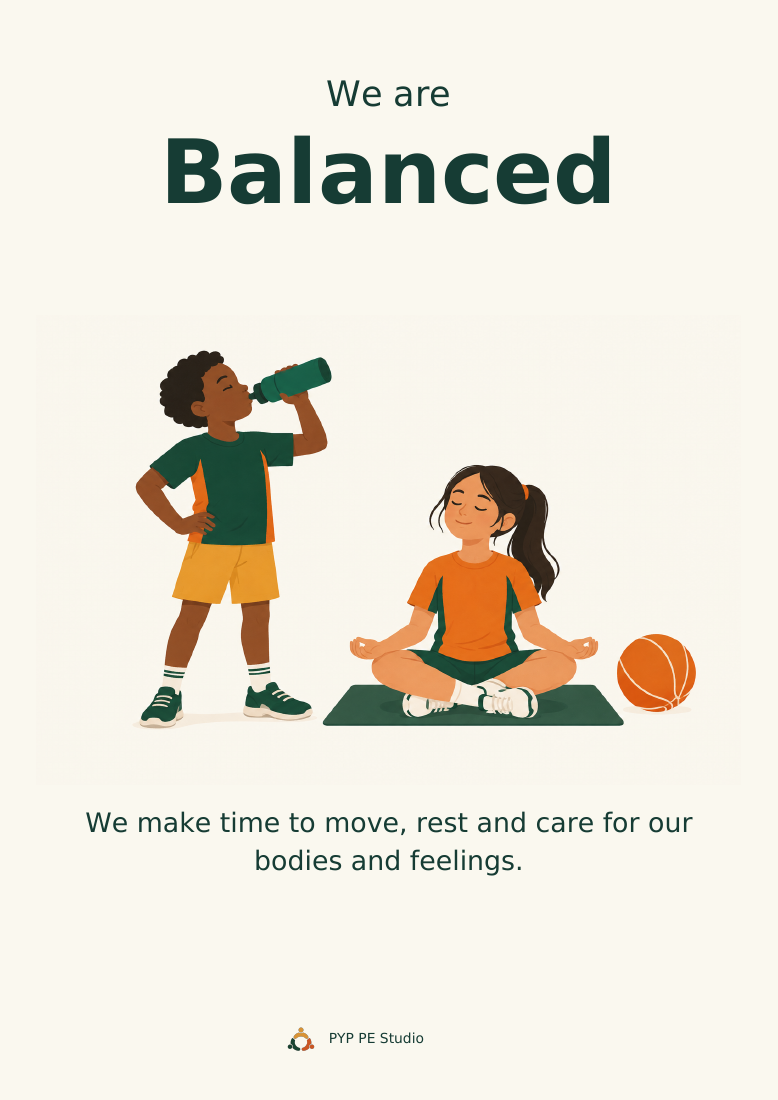
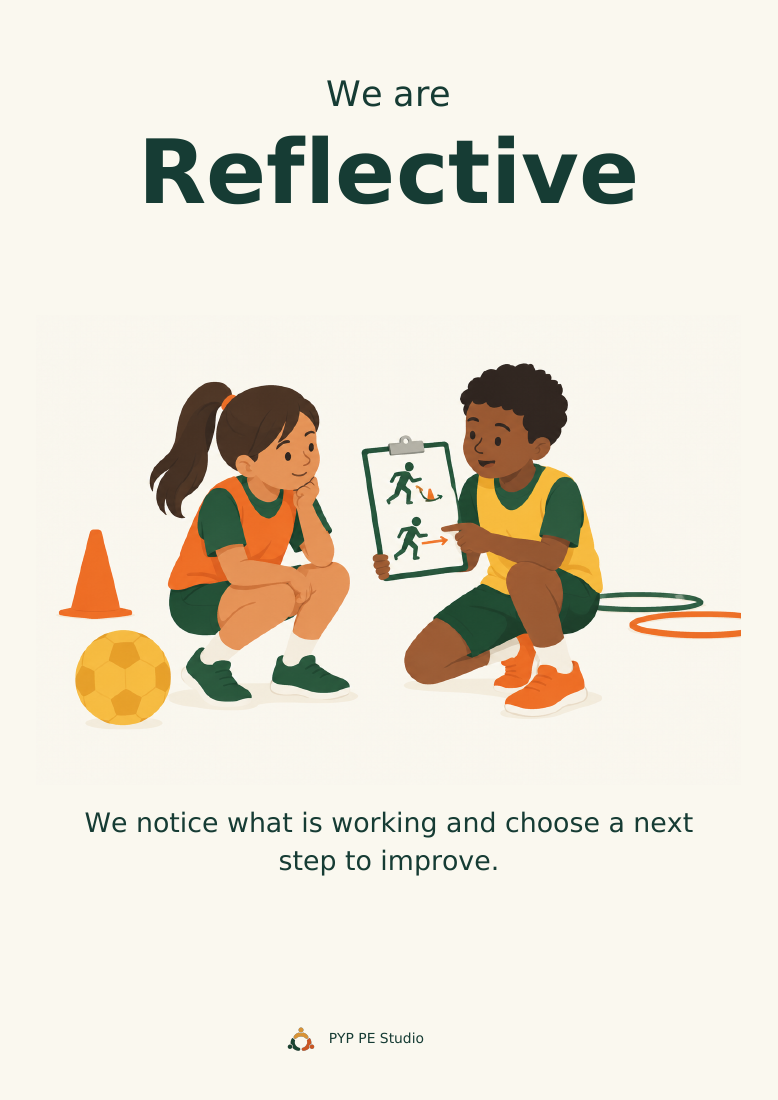
Download the 10-page poster collection
Independent PE teaching resource by PYP-PE.com. Learner Profile attribute names belong to the IB; PE explanations and illustrations are created for this resource.
Using KWL charts to find our starting point, listen to learners and return to what matters.
At the start of every unit, I use a KWL chart as a simple pre-assessment. It gives me a starting point: what students think they know, what they want to find out and, eventually, what they have learned. Just as importantly, it gives their questions a place in the planning.
Students usually work in groups of three or four, sharing ideas before recording them on one chart. The small-group conversation matters as much as the writing. I listen for previous experiences, useful connections, uncertainties and ideas we may need to revisit.
I use “What we think we know” for the first column. It makes room for ideas to change. This is a starting point for learning, so an uncertain answer can be just as useful as a confident one.
In an Invasion Games unit, one learner might ask, “What are the rules in Ultimate Frisbee?” Another might wonder, “Why is a netball court divided into three thirds?” Those questions offer routes into exploring rules, space, roles and how different games work.
The next step is to show students that their questions have an effect. We might try an adapted game, compare how space is used, or investigate a rule and test what changes when we alter it. Student voice becomes agency when it helps shape a learning experience.
Not every question needs a separate lesson. I look for connections between their interests and the unit’s learning goals, then make those connections visible: “Several groups wondered about this, so today we are going to explore it.”
Midway through the unit, groups revisit their original ideas. Which questions have we explored? Has anything changed? What are we still curious about? We add dates or use a different colour so the development of our thinking is visible. This check-in also helps me decide what needs more time or a different approach.
At the end, we complete the learned column and reflect on the unit. I encourage students to include an example from a game, discussion or movement challenge: what can they now explain, show or do? Unanswered questions can become starting points for future learning.
Give everyone a moment to think before sharing, then invite each group member to contribute. Learners can write, draw, explain aloud or ask a partner or adult to record their ideas. A group chart offers useful clues; I combine it with individual conversations and observation in PE to understand each learner’s starting point.
The PYP connections happen naturally: Inquirers ask questions, Communicators listen and share, and Reflective learners consider how their understanding has developed. Communication, social and thinking skills are practised throughout; research skills come into play as students investigate their questions.
It is a simple tool, but returning to it makes it valuable. The chart becomes a record of students’ thinking and a practical way to let that thinking guide what happens next.
The two-page pack includes a spacious group chart and a midway/end-of-unit reflection sheet, with student-friendly Learner Profile and ATL prompts. Use one pack per group of three or four.
Download the KWL pack · 2-page PDF
Designed for A3 landscape. Print at A3, or choose “fit” for A4.