PYP-PE.comPhysical and Health Education in the PYP

From the gym floor · Invasion games

Whose game is it?

Celebrating student agency through our invasion games unit.

Familiar games have given us plenty to explore: attacking, defending, making decisions and learning to work things out together. This is a unit that never feels quite long enough.

Go to the printable resources ↓
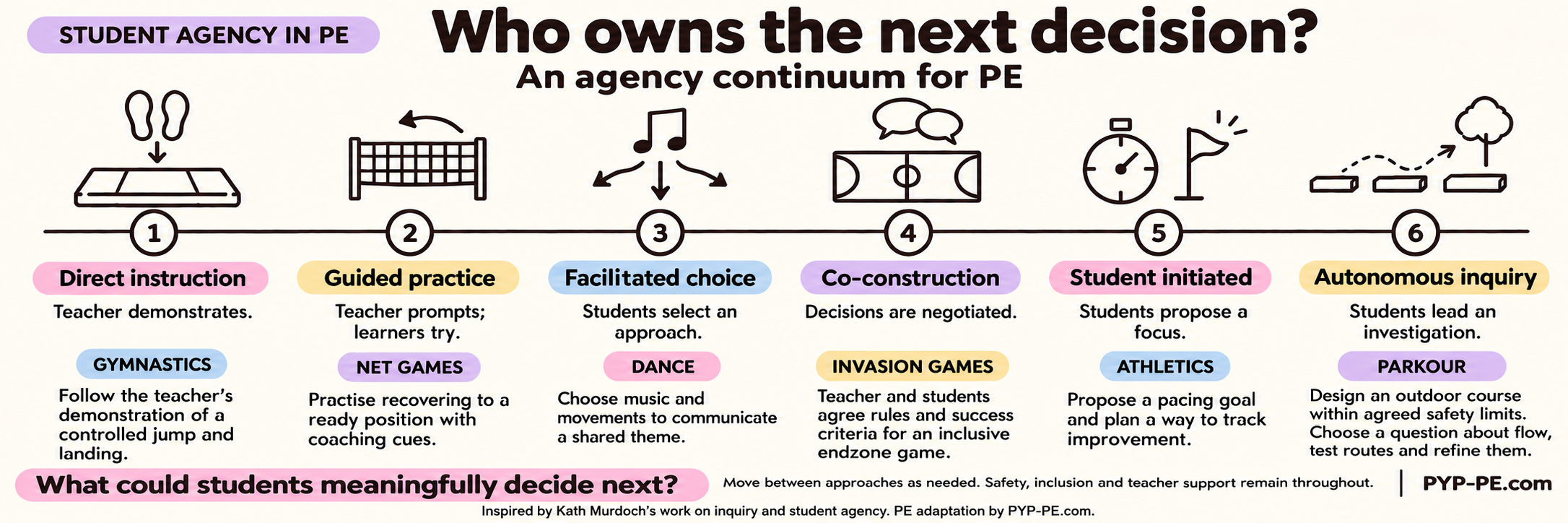
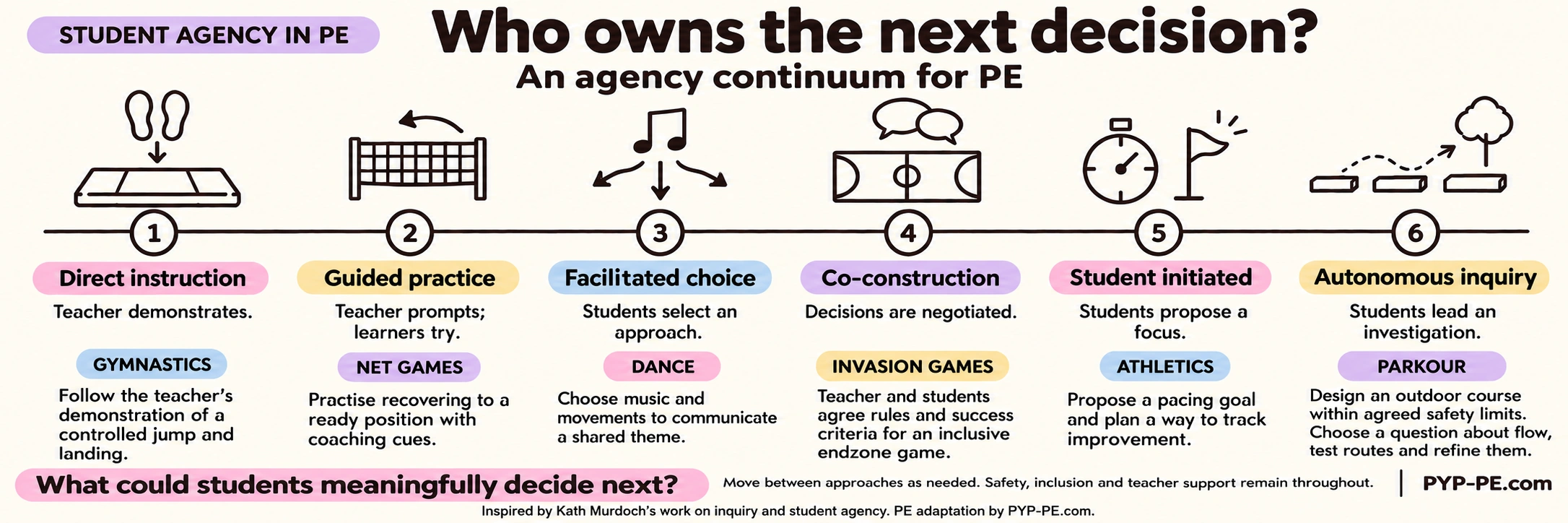
Six approaches to agency in PE, from direct instruction to autonomous inquiry, illustrated through gymnastics, net games, dance, invasion games, athletics and parkour
A discussion tool, not a ranking of teaching quality. Direct teaching, shared decisions and independent inquiry each have a place.

Choice, voice and ownership

Which decisions can students own?

A recent staff session led by our PYP coordinator, Sarah Gooding, prompted some great conversations. We sorted scenarios along an agency continuum and explained our choices. It made me think more carefully about who makes the decisions in PE.

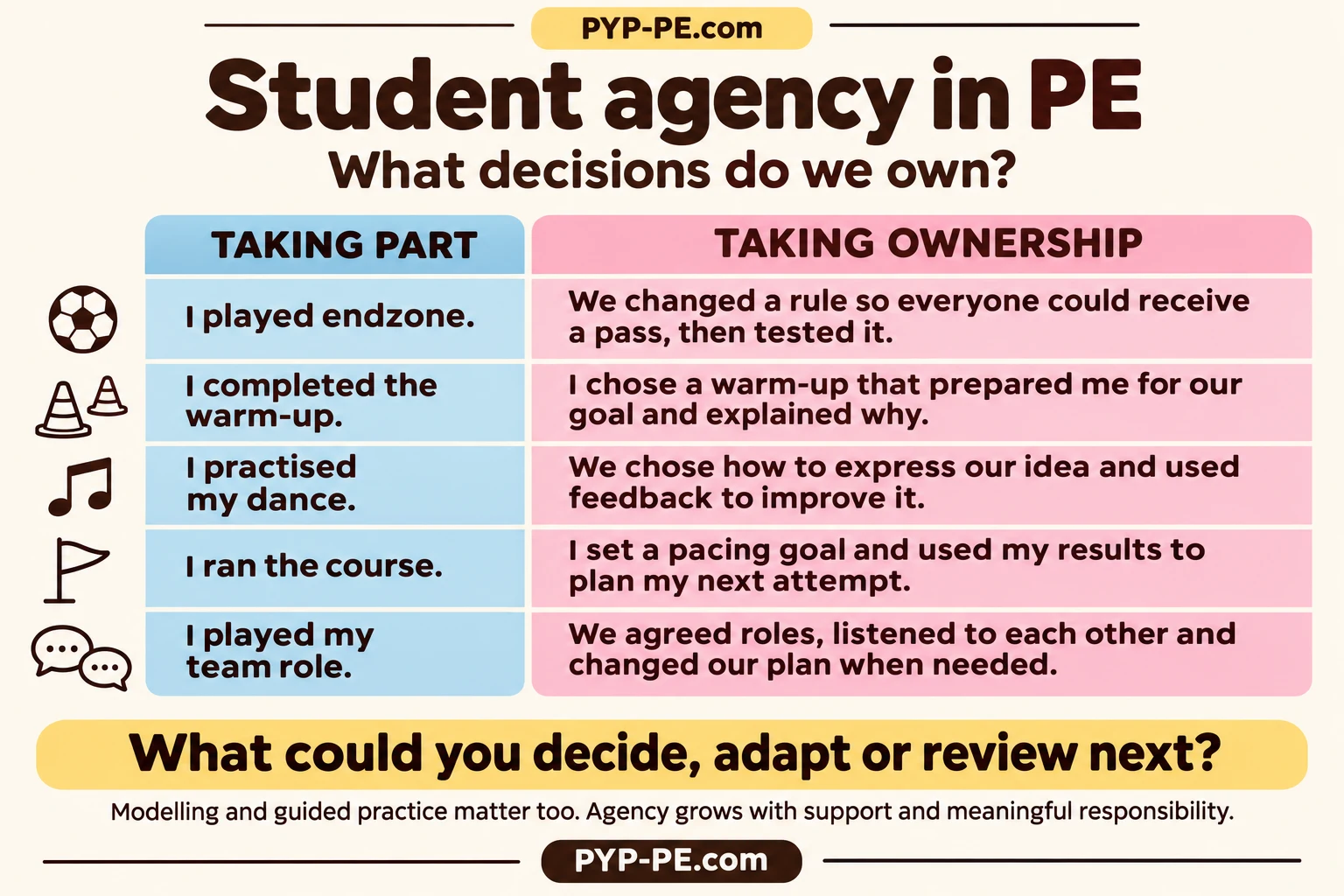
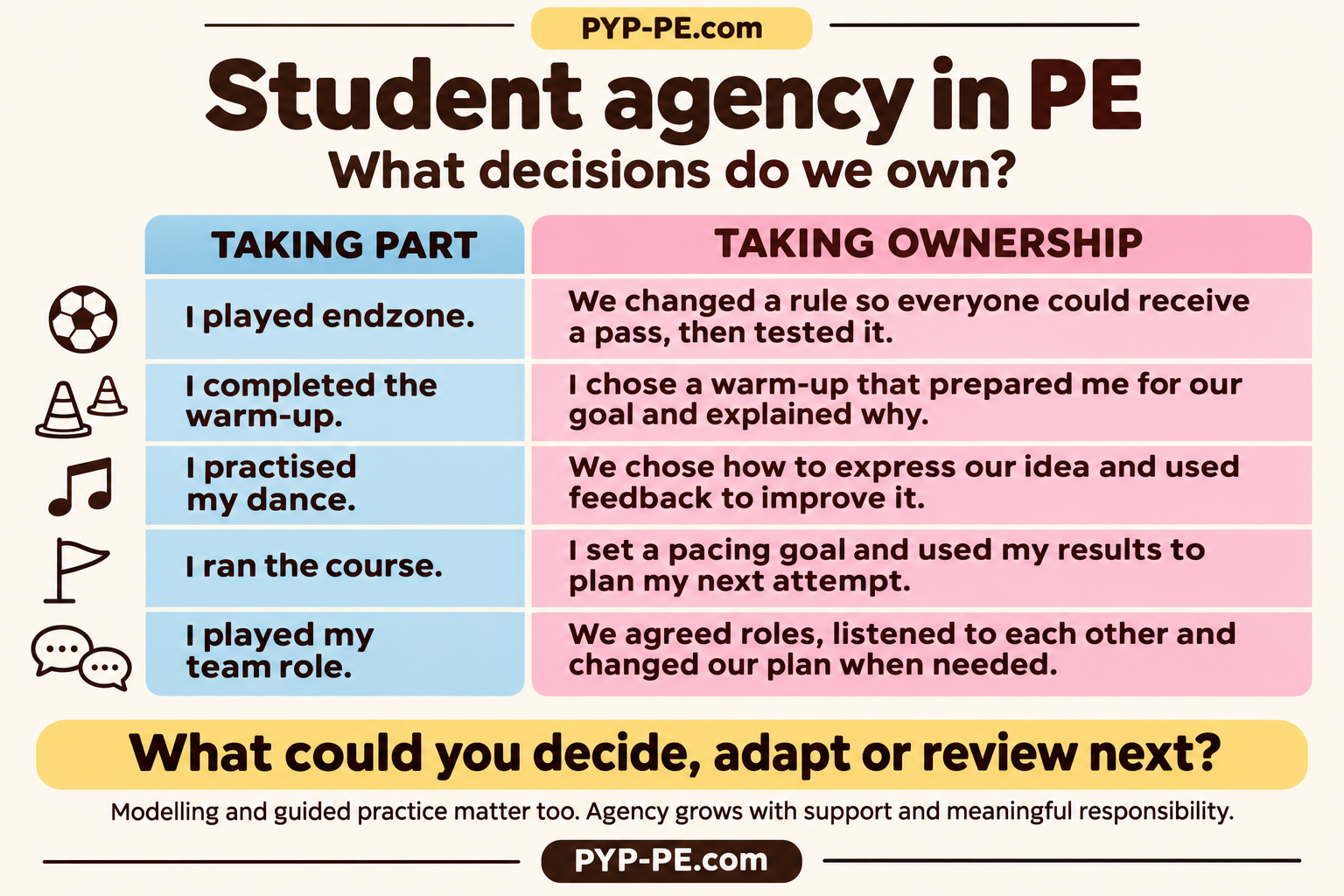
Choosing a game is a starting point. The learning becomes more purposeful when students explain that choice, influence how the game works and use what happens to decide their next step.

We still teach skills directly and establish safe, inclusive boundaries. The useful question is not whether students chose everything, but whether they had a meaningful part in shaping their learning.

Try the continuum with your team

Where would you place these examples? What would need to change to give students more agency?

  • Gymnastics: follow a demonstration of a controlled landing.
  • Dance: choose movements to express a shared theme.
  • Invasion games: agree rules and success criteria for an inclusive game.
  • Parkour: design and refine a floor-level outdoor route within agreed safety limits.

The same activity may sit in different places depending on who chooses the question, process and next steps.

Download the PE continuum

This PE continuum is my adaptation, inspired by Kath Murdoch’s work on inquiry and student agency. It is not an official IB framework.

Agency through the PYP lens

More than choosing a game

Through the PYP lens, agency involves students having a voice, making meaningful choices and taking ownership of their learning. In PE, this means helping learners understand what they are working towards and giving them opportunities to influence how they get there.

Choosing basketball or endzone is a starting point. Explaining which game will help a group explore defensive strategies, adapting it so everyone can contribute, and deciding what to try next takes that ownership further.

These opportunities help students become more independent, thoughtful and responsible learners. They practise communicating their ideas, listening to different perspectives and reflecting on the effect of their decisions. Being principled becomes something we can observe when students make honest calls; being caring becomes visible when they change a rule to include someone.

Agency also needs support. Clear learning intentions, safe boundaries, direct teaching and timely feedback help students make informed decisions. My role is to judge when to model, when to question and when to give a group more time to work things out.

That is part of why this unit never feels quite long enough. As students become more confident in taking responsibility, their questions and ideas open up new directions worth exploring.

In our lessons

Three ways we have made room for agency

Choose a game for a purpose

Shared focusExplore defensive strategies.

Student decisionsGroups choose basketball, netball or Capture the Flag as the vehicle, then set a challenge.

What to listen forWhy does this game help us practise our focus? What will we try next?

Work through disagreements

Shared expectationExplain, listen and restart fairly.

Student decisionsUltimate’s self-officiating approach gives students responsibility for calls. A witness can describe what they saw.

Teacher supportI step back where possible, and step in when students need help to resolve things.

Adapt the challenge

Shared questionHow could this be more accessible or more challenging?

Student decisionsGroups design games and change a rule, the space or equipment, then test the effect.

Evidence to discussWho did the change help? Could everyone contribute? What should we keep?

Learner Profile and ATL: what might we notice?
FocusObservable action
PrincipledMaking an honest call, even when possession changes.
CommunicatorsExplaining a decision and listening to another account.
Social skillsAgreeing roles and resolving a disagreement.
Thinking skillsTesting a rule change and judging its effect.
Games and suggested starting points

Adapt to experience, access needs and space. Year and grade labels vary between schools.

GameStarting pointUseful focus
Endzone ballGrade 1 upwardsSpace, passing, teamwork
Yoshi / Capture the FlagLower primary upwardsAttack, defence, decisions
3v1 keep-ballLower / middle primaryPassing options
Modified handball, basketball, netballMiddle / upper primarySupport and defending
Ultimate with a soft discUpper primary, after disc practiceSelf-officiating
Football endzoneMiddle / upper primaryPassing lanes

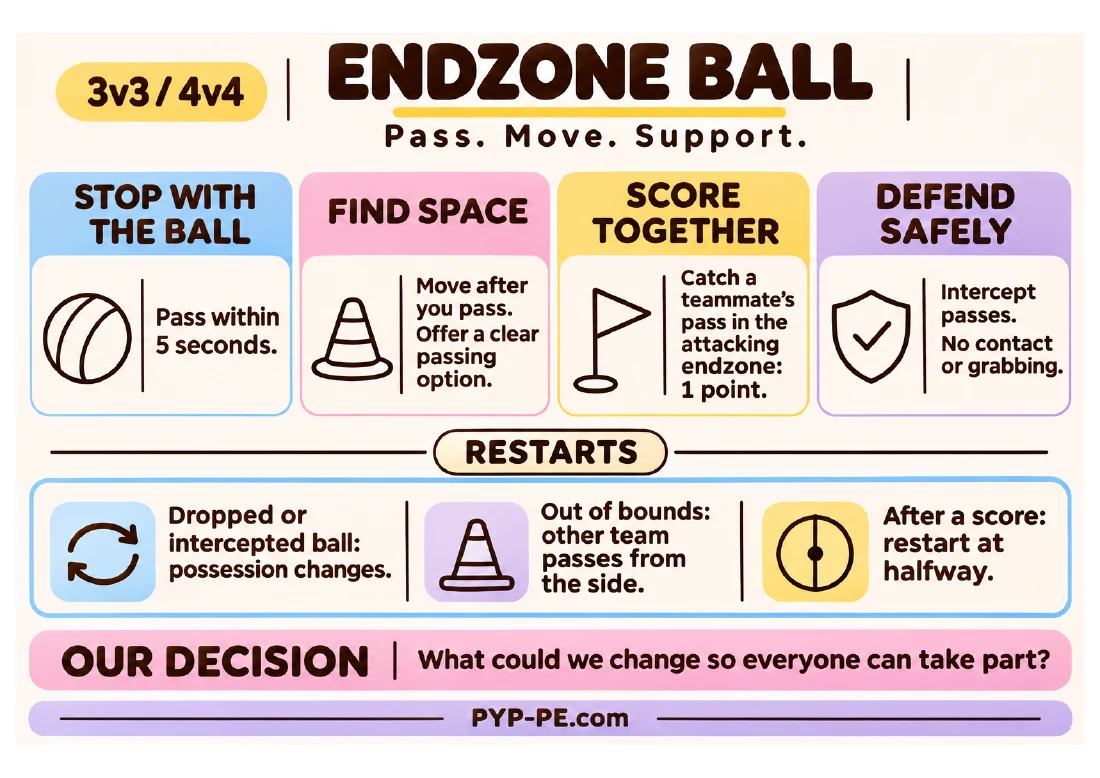
I find modified handball a particularly useful option. Our non-contact rules and flexible equipment help us adapt it for the group. Endzone can introduce the ideas before adding nets later with older learners.

Read the inclusive Endzone lesson →

Resources that support the decisions

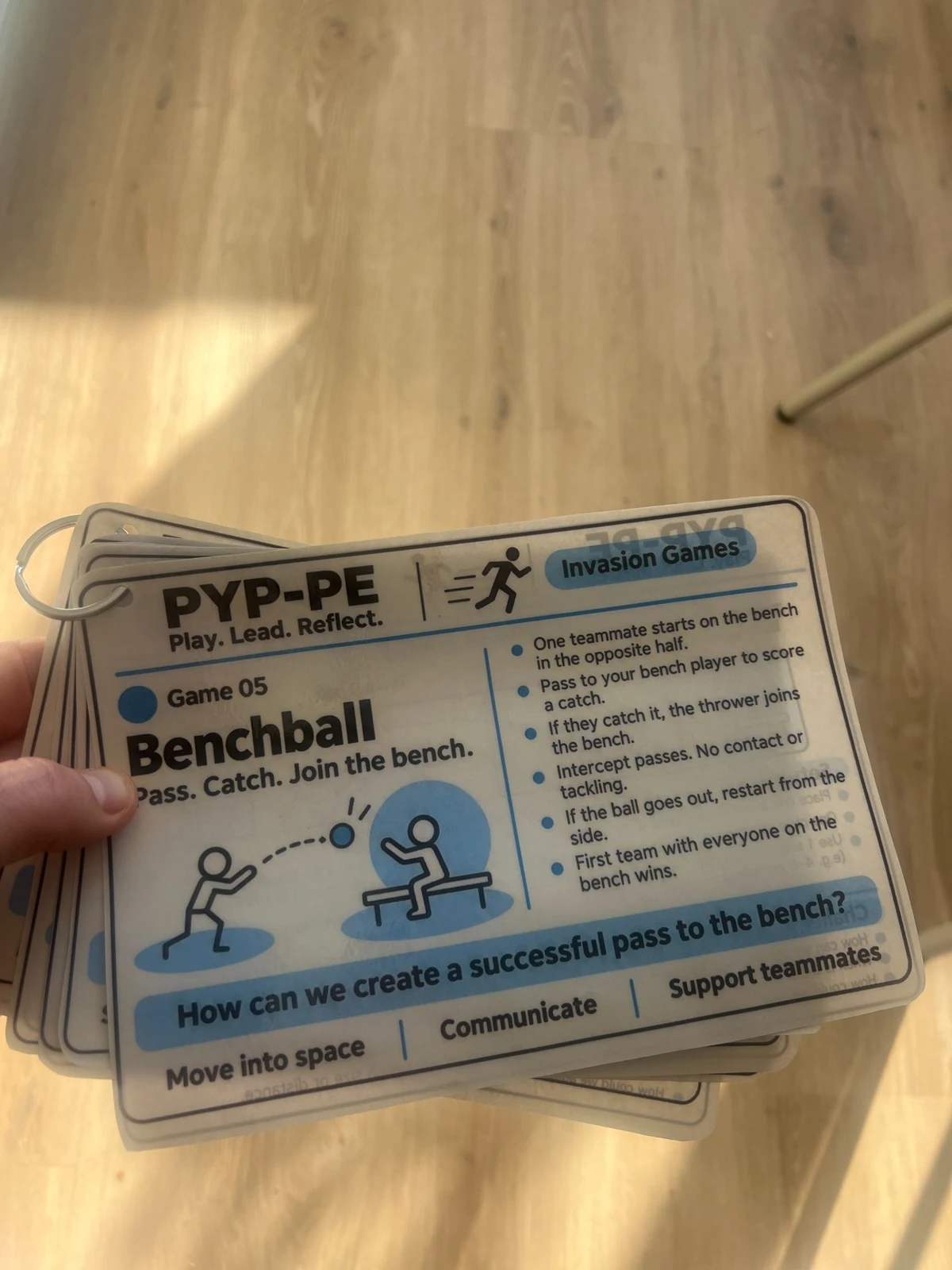
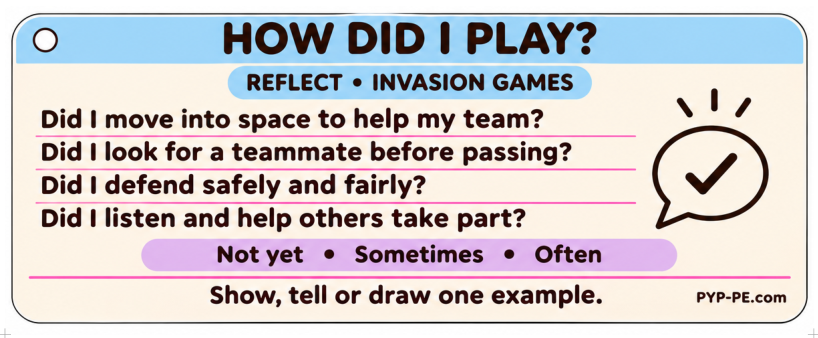
Our printed game cards, laminated and held on a key ring
A resource first made for colleagues, now also used by students to discuss their choices.

I initially made the game cards as a small helping resource for members of my team who were new to the IB. They naturally became something students could use too: looking through familiar games, discussing the options and choosing how to test their skills.

Before play, we can ask: “Which game will help us work on our focus?” After a round: “What happened, and what will we change?” The cards support that conversation; they do not make the decision for the students.

Keep reflection manageable. Choose one question, give an example and set one related goal. Replay before asking students to reflect again. Students can show, say or draw their thinking.
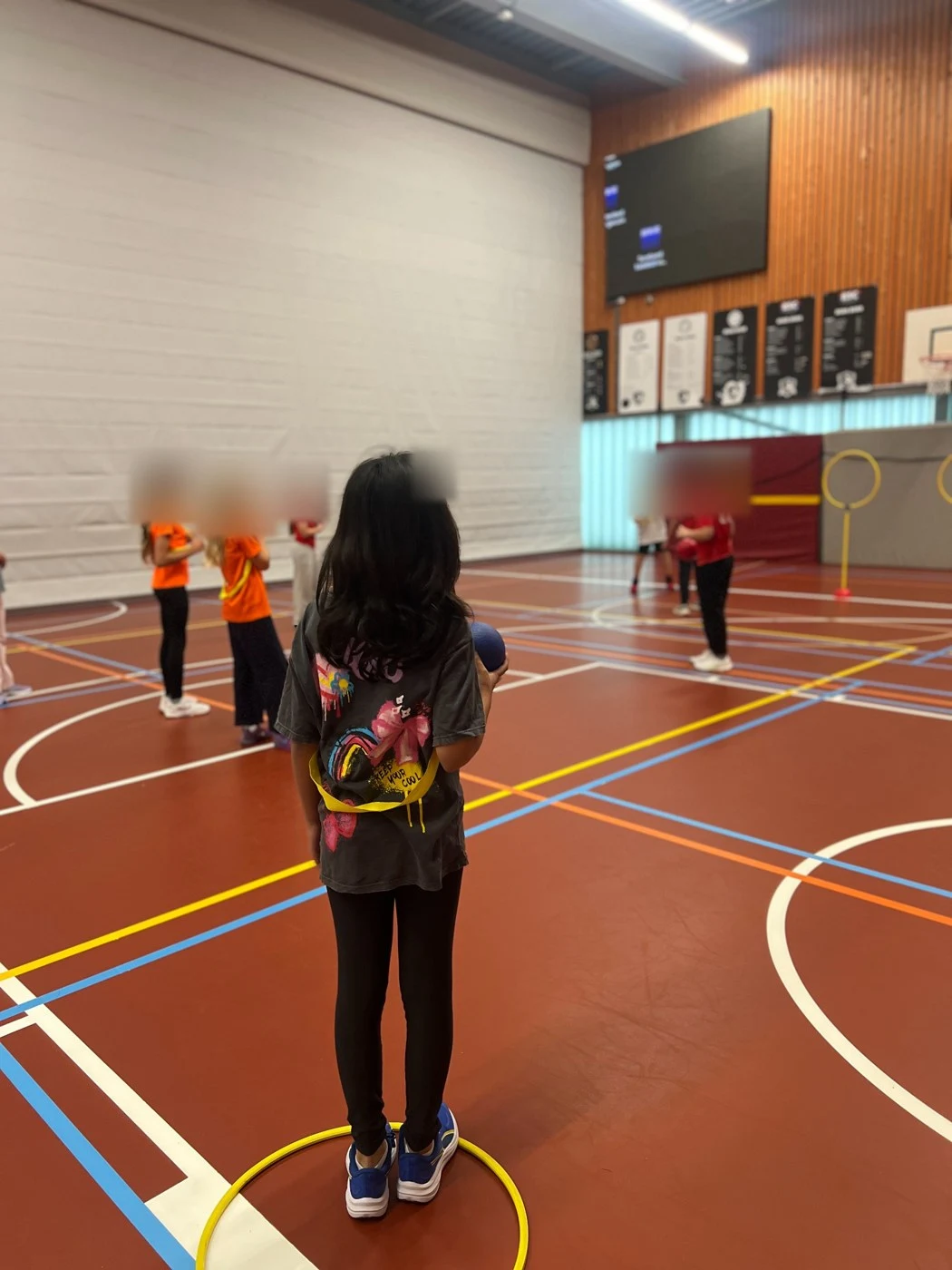
A Year 6 example: sharing roles in Quidditch
A Year 6 beater inside a floor hoop; student faces are obscured
Our adapted game gives teams several roles to organise and rotate.

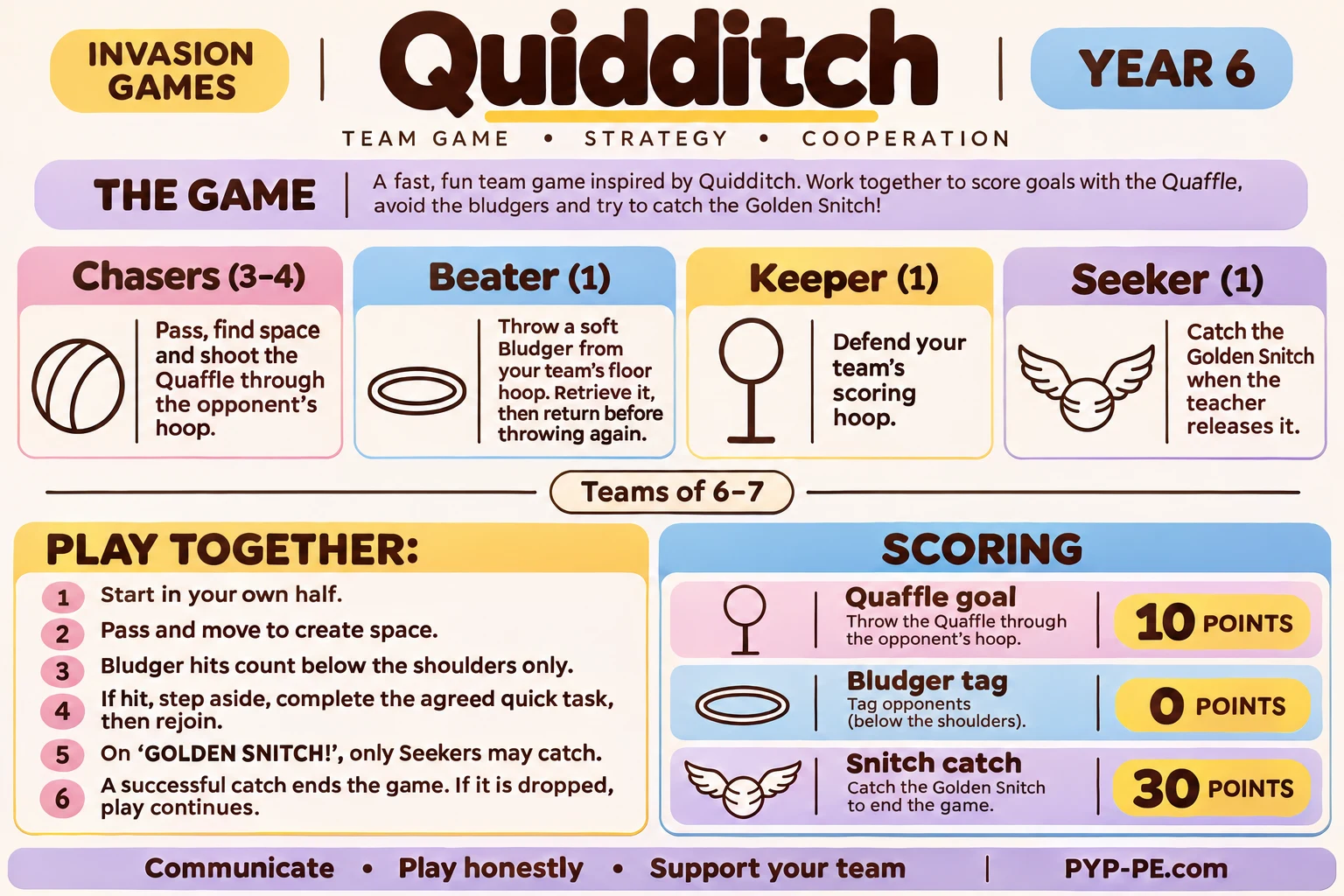
Quidditch brought another way to explore teamwork. Chasers, a keeper, a beater and a seeker each have a different responsibility.

A short team huddle gives students time to agree who starts where. Rotating roles then opens a useful conversation: how did a different role change what you noticed?

The rules poster is included below.

Print, use and adapt

Take the ideas into your own setting

Choose the resource that fits your learners and your next teaching focus.

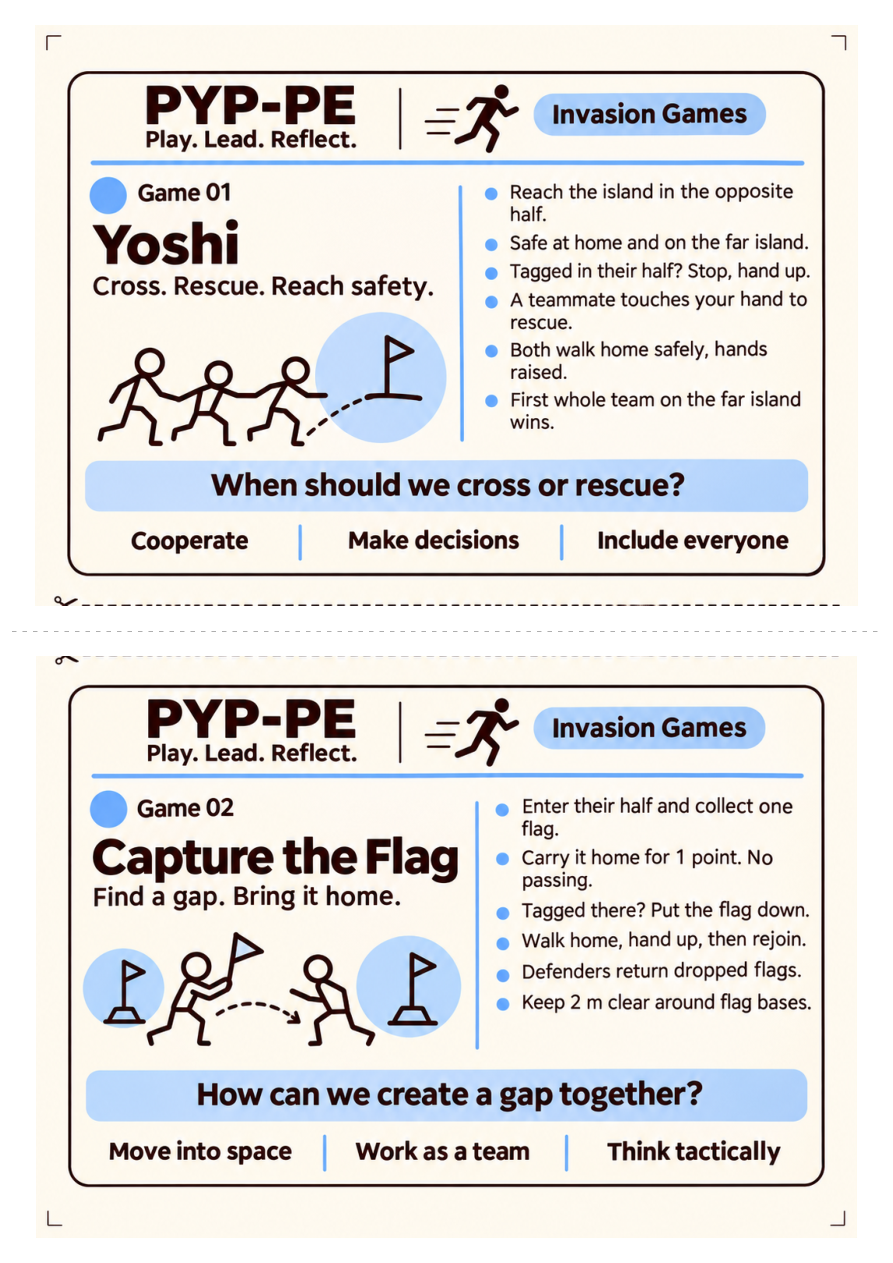
Game choice cards preview

5 games · 6 A4 pages

Game choice cards

Five familiar games to compare, discuss and adapt. Agree the learning focus before choosing a game.

Download PDF
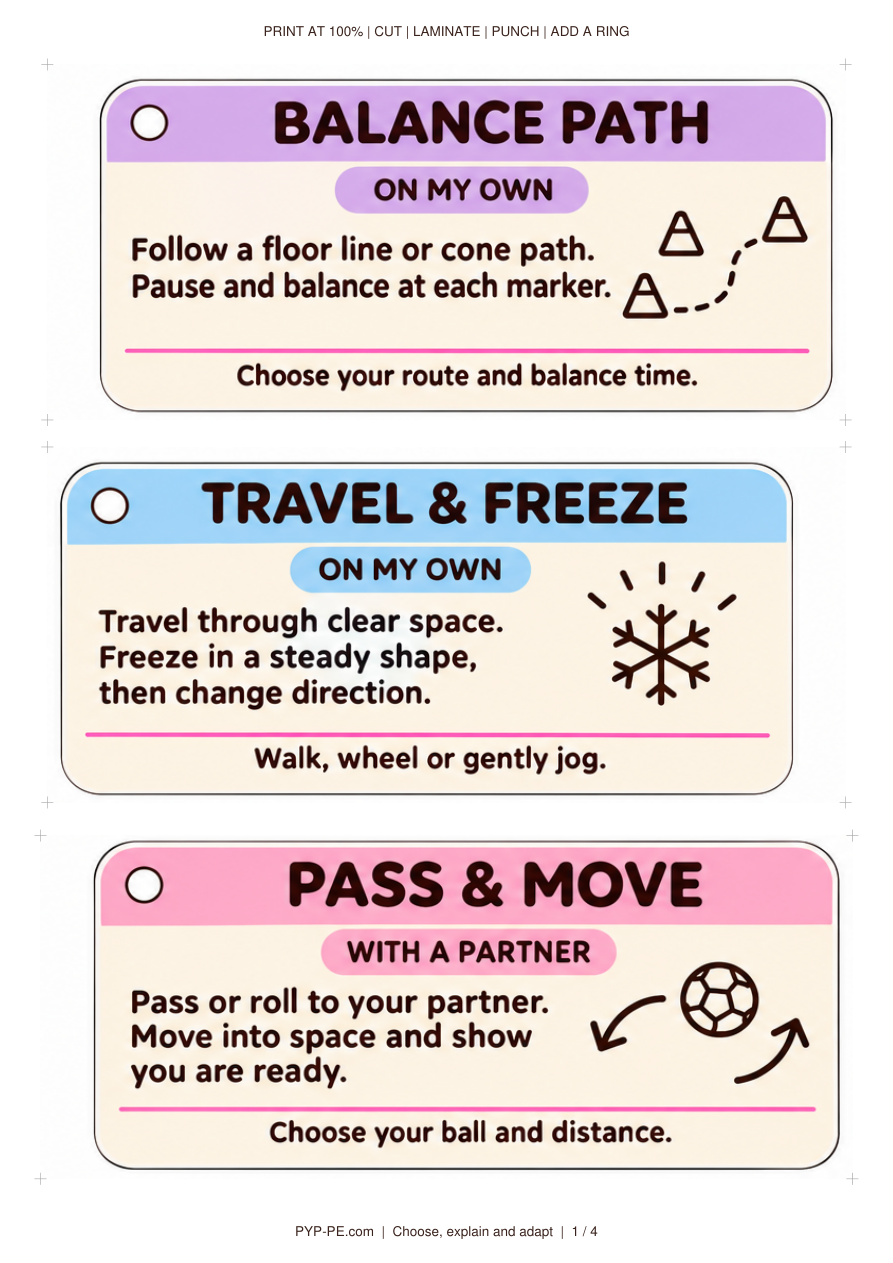
Movement preparation & skill challenges preview

12 cards · 4 A4 pages

Movement preparation & skill challenges

Solo, partner and group choices. Pair a travelling activity with a skill challenge; build up gradually for the lesson ahead.

Download PDF
Reflect, choose a goal, replay preview

One card, front and back · 2 A4 pages

Reflect, choose a goal, replay

Choose one question, give an example, then select a related goal. Revisit it after the next round.

Download PDF
Endzone: rules, roles & responsibilities preview

3 A3 posters

Endzone: rules, roles & responsibilities

Keep the rules and tactical roles visible so groups can revisit expectations and share responsibility.

Download PDF
Our adapted Quidditch game preview

1 A3 poster

Our adapted Quidditch game

Use the roles and rules from our Year 6 game. Rotate responsibilities and discuss how each role supports the team.

Download PDF

For waiting teams, pair these with the invasion games peer-assessment cards: observe one focus, share an example and replay.

More ways to discuss agency across PE

Further reading

Ideas that informed this post

  • Kath Murdoch — inquiry learning and student agency; the inspiration for this PE continuum.
  • Trevor MacKenzie — the swimming-pool inquiry visual that inspired an earlier graphic exploration.
What could your students take greater ownership of in their next game?